Jewelry Findings Names: What Each Part Is Called and What It Does
Published How we research
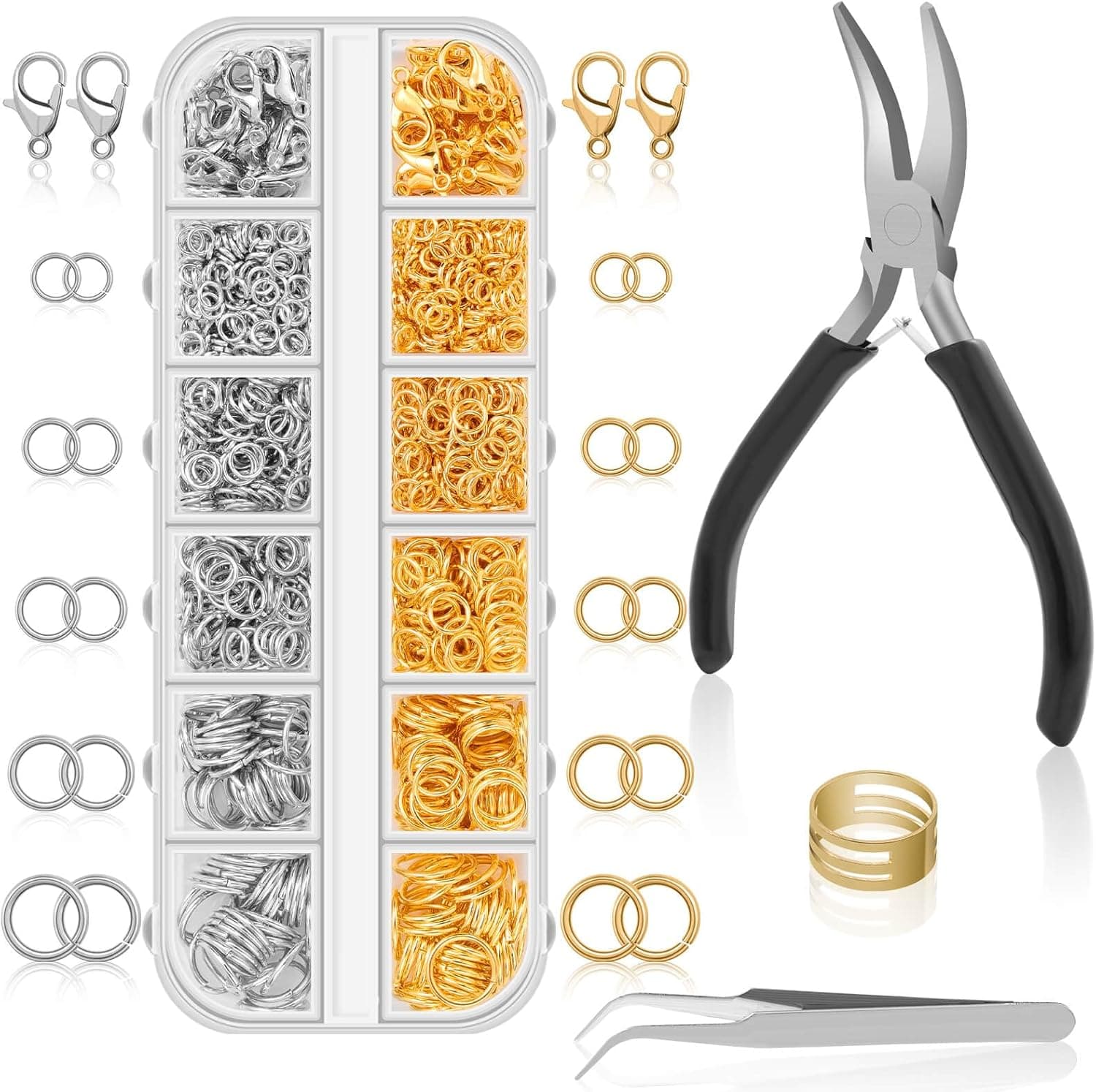
Jewelry findings are the small functional parts that hold a piece together: clasps, jump rings, pins, crimps, ear wires, bails and end caps. If it is not a bead, a pendant or the stringing material, it is almost certainly a finding. This reference groups the common findings by the job they do, gives the names you will see on packaging and in patterns, and lists the sizes worth keeping on hand, so you can identify a part or work out what a design needs before you order.
Clasps: the parts that open and close
Lobster clasp: a spring-loaded hook shaped like a lobster claw, opened with a small lever. It is the default closure for necklaces and bracelets; 10 to 12mm suits most necklaces and 12 to 15mm is easier to operate on bracelets. Spring ring: a round tube ring with a sliding spring gate, lighter and cheaper than a lobster clasp and common on fine chains. Both close onto a jump ring, a chain tab or an extender chain.
Toggle clasp: a bar that passes through a ring, easy to fasten one-handed and decorative enough to wear at the front; it relies on the weight of the piece to stay closed. Magnetic clasp: two halves held together by magnets, helpful for people who struggle with small levers but best kept to lighter pieces. Barrel or screw clasp: two halves that screw together, common on beaded necklaces. Hook and eye, and S-hook: simple bent wire closures. Box clasp: a tab that clicks into a decorative box, used on pearl strands and multi-strand bracelets. Slide lock or tube clasp: a bar with several loops, made for multi-strand designs.
Rings and connectors: joining one part to another
Jump ring: a plain wire ring with a cut, opened sideways with two pliers and used to join clasps, charms and chain. Sizes are given as outside diameter and wire gauge; 4 to 6mm rings in 20 or 18 gauge handle most everyday connections. Closed or soldered jump ring: the same ring with the join fused, used where thin wire or thread could slip through a cut, for example as the ring that a crimped beading wire loop attaches to. Split ring: a tiny key ring with a double coil that cannot pull open, the secure choice for charms.
Connector or link: a decorative piece with a loop at each end, placed between chain or beaded sections. Chandelier component: a connector with one loop on top and several below, used for earrings. Spacer bar: a bar with multiple holes that keeps the strands of a multi-strand bracelet parallel. Extender chain: a short length of large-link chain added behind the clasp to make the length adjustable, usually by about 2 inches. Bail: the loop that lets a pendant hang from a chain. Pinch bails grip a top-drilled stone through its hole, and glue-on bails have a flat pad for cabochons and undrilled pieces.
Pins: turning beads into dangles and links
Head pin: a straight wire with a flat head, like a blunt nail. A bead sits on the head and the wire above it is turned into a loop, making a dangle. Ball pin: a head pin with a round ball end instead of a flat head, a neater look for visible drops. Eye pin: a wire with a ready-made loop at one end. After adding beads you form a second loop, creating a link that connects at both ends, which is the basis of rosary-style beaded chain.
Pins are sold by length and gauge. Two inches (50mm) is the all-purpose length, and 1 to 1.5 inch pins suit single small beads. Thin 24 gauge pins fit pearls and small-hole stones, while 21 or 22 gauge pins hold a simple loop more securely for glass and larger beads. Paddle pins, with a flattened end, are a decorative alternative for wire-wrapped drops. All of them are finished with round nose pliers.
Crimps and ends: finishing wire, thread and cord
Crimp bead and crimp tube: small soft metal beads squeezed onto beading wire to lock a loop around the clasp. Tubes compress more evenly than round crimp beads, and 2x2mm tubes pair with the common .018 and .019 inch wires. Crimp cover: a hollow C-shaped bead that closes over a finished crimp so it looks like a small round bead. Wire guardian, also called a wire protector: a small horseshoe-shaped channel that shields the wire loop from rubbing against the clasp.
Bead tip, also called a clamshell or calotte: a hinged cup that closes over a knot at the end of thread or silk, with a hook or loop to attach the clasp. French wire, also called gimp or bullion: a fine coil that covers silk where it passes through the clasp on knotted pearl strands. Cord end and fold-over crimp: a metal cap or a pair of flaps pressed onto leather, suede or cotton cord. Ribbon end: a toothed clamp for flat ribbon and lace. End cap and cone: a cap glued or wired over the gathered ends of multi-strand or braided pieces. Bead cap: a small decorative cup that sits against a bead, ornamental rather than structural but sold with findings.
Earring findings
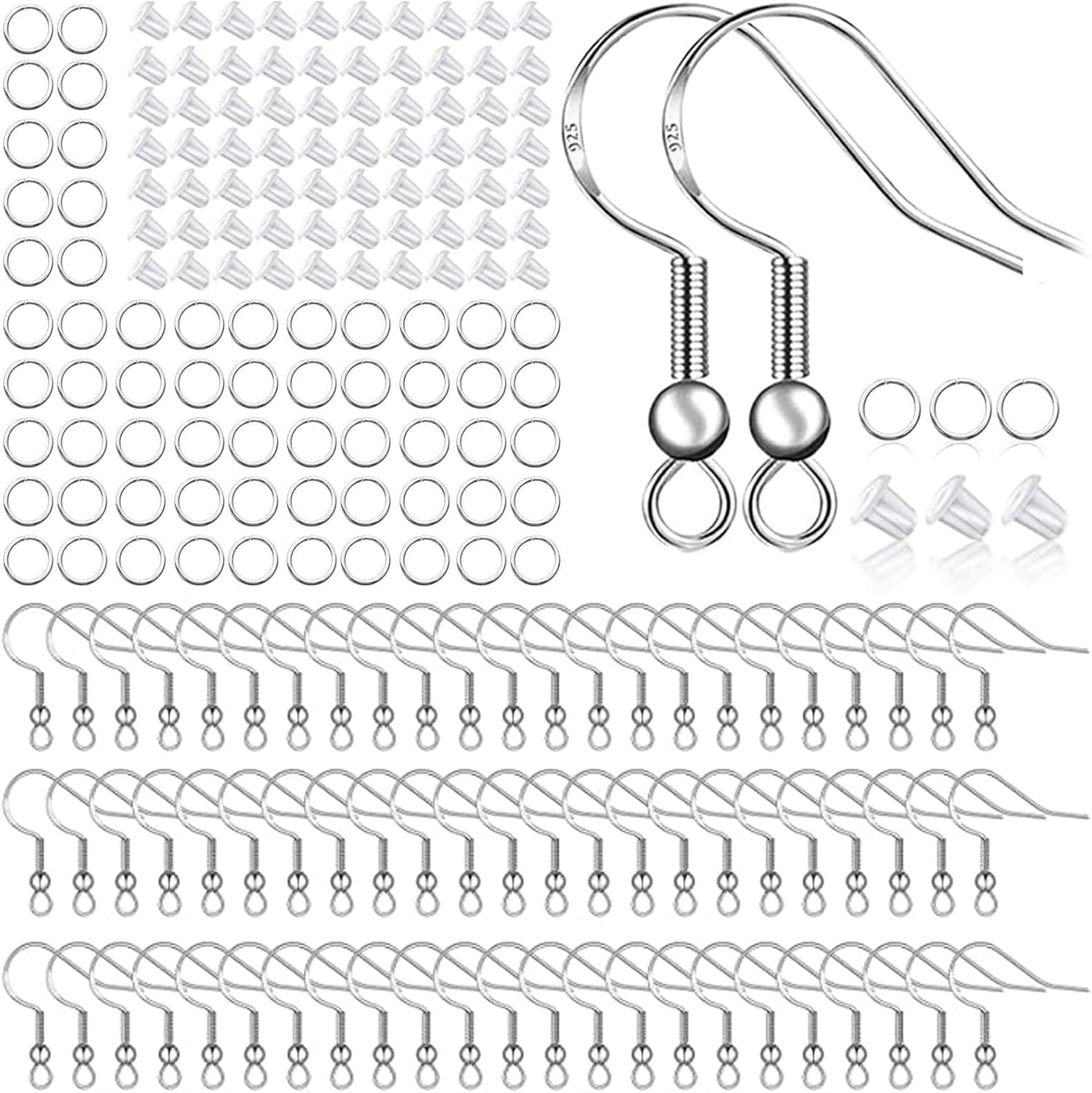
Ear wire: the general term for the wire that goes through the ear. French hook or fish hook: an open curved hook with a small loop at the front for the dangle, the standard for drop earrings. Lever back: a hook with a hinged closing arm, more secure for heavier or valuable earrings. Kidney wire: a long kidney-shaped loop that latches behind the ear. Hoop: a wire circle, either a finished earring or a beading hoop that opens so beads can be added.
Post or stud: a straight pin with a flat pad, cup or ball at the front, and on some styles a loop for hanging a dangle. It is held by an ear nut, also called a butterfly back, clutch or scroll, or by a soft silicone back. Clip-on and screw-back findings serve unpierced ears. For anyone with sensitive skin, look for surgical stainless steel, titanium, niobium, sterling silver or gold-filled wires rather than plated base metal.
What to keep stocked first
A small kit covers most beginner projects: lobster clasps in 12mm, open jump rings in 4mm and 6mm, a few split rings, 2 inch head pins and eye pins, 2x2mm crimp tubes with crimp covers, wire guardians, French hook ear wires with silicone backs, and a few extender chains. Buy base metal versions to learn on and keep each finish (silver tone, gold tone, antique brass) in its own labeled compartment. Move up to stainless steel, sterling silver or gold-filled once your loops and crimps are consistent. Mixing metals in one piece can be a design choice, but mixing them by accident because the box was unsorted is an easy way to make a piece look unfinished.
Frequently asked questions
What are jewelry findings? Findings are the functional metal components of a piece of jewelry other than the beads, stones and stringing material. Clasps, jump rings, head pins, crimps, ear wires, bails and end caps are all findings.
What is the difference between a head pin and an eye pin? A head pin has a flat or ball stop at one end, so it makes a dangle that hangs from one point. An eye pin has a loop at one end, so after you add beads and form a second loop it becomes a link that connects on both sides.
What is the difference between a jump ring and a split ring? A jump ring is a single loop of wire with one cut, opened and closed with pliers. A split ring is a double coil like a miniature key ring. It cannot pull open under load, which makes it safer for charms, but it is bulkier and slower to attach.
What size jump ring and lobster clasp should I use? For most necklaces and bracelets a 12mm lobster clasp with 5 or 6mm jump rings in 18 or 20 gauge works well. Use smaller 4mm rings in 20 or 22 gauge for earrings and fine chain, and heavier 16 gauge rings for chunky designs.
Products from this article
The highest-scoring picks from the buying guides mentioned above. Scores are our editorial assessment, not customer ratings.
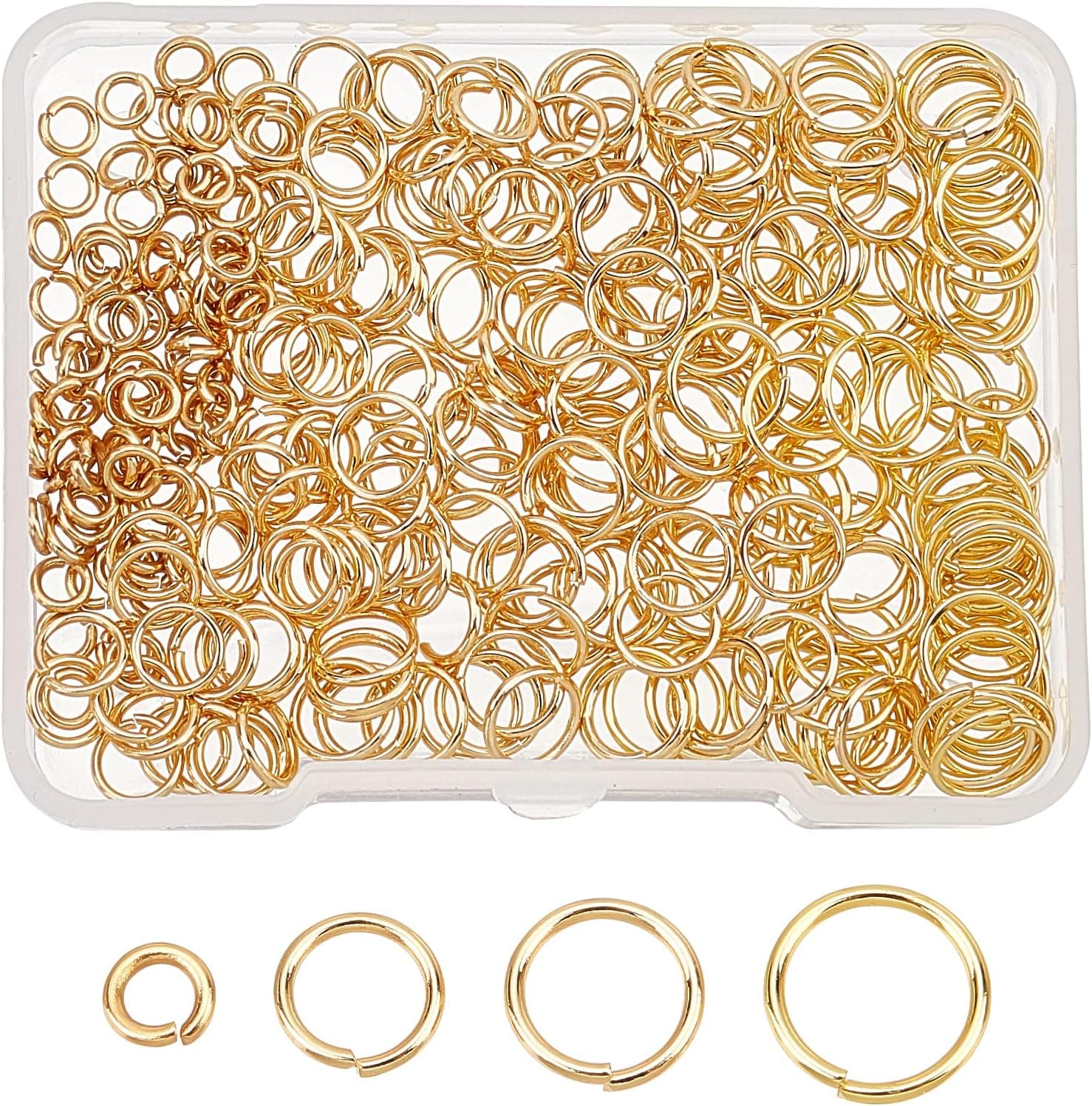
+ 24K gold plating over stainless steel keeps a warm color longer
From our guide: Best Jump Rings for Jewelry Making: Strength and Finish Compared
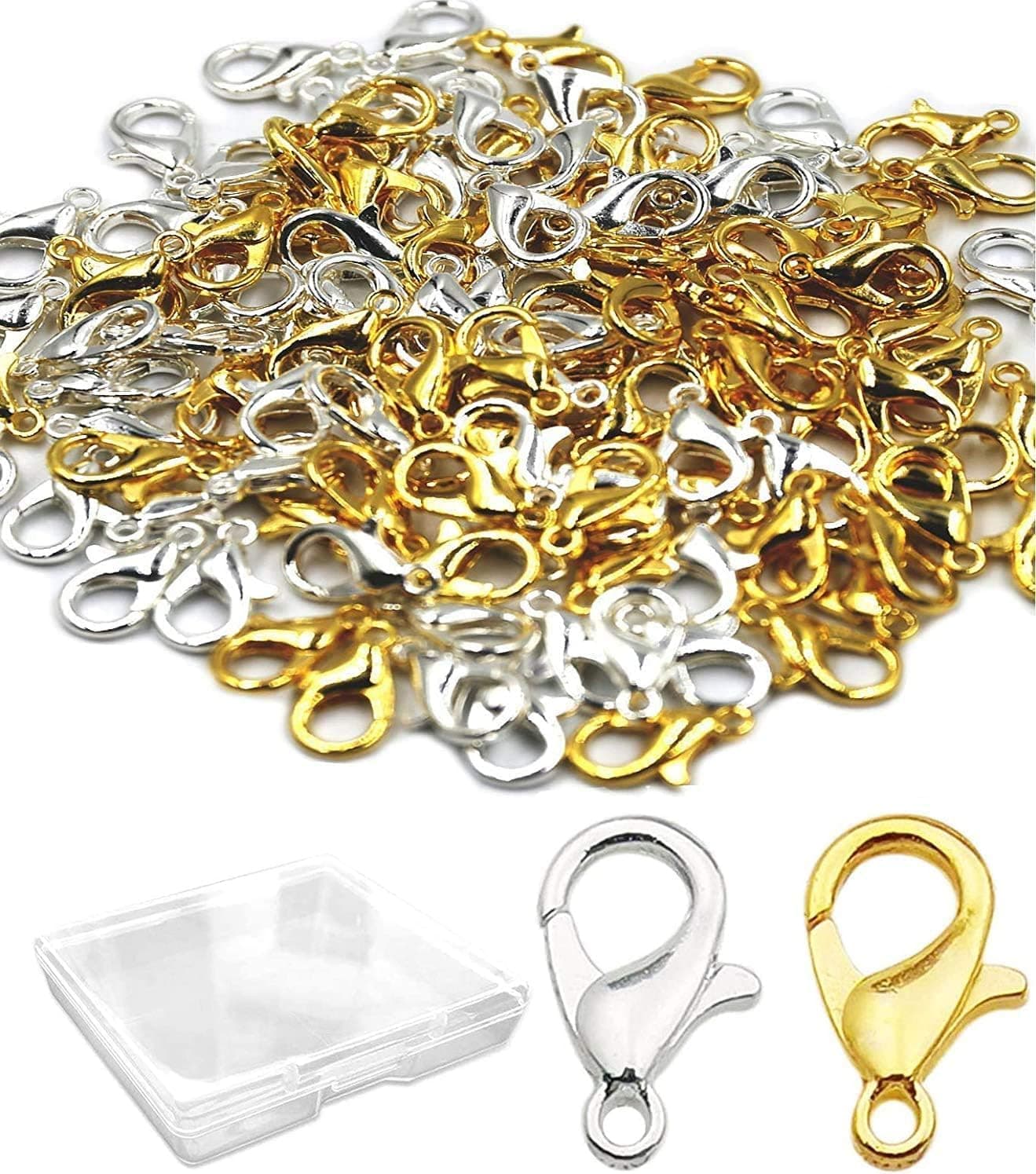
+ Stainless steel clasps resist rust and tarnish in daily wear
From our guide: Best Lobster Clasps for Jewelry: Reliable Closures Ranked
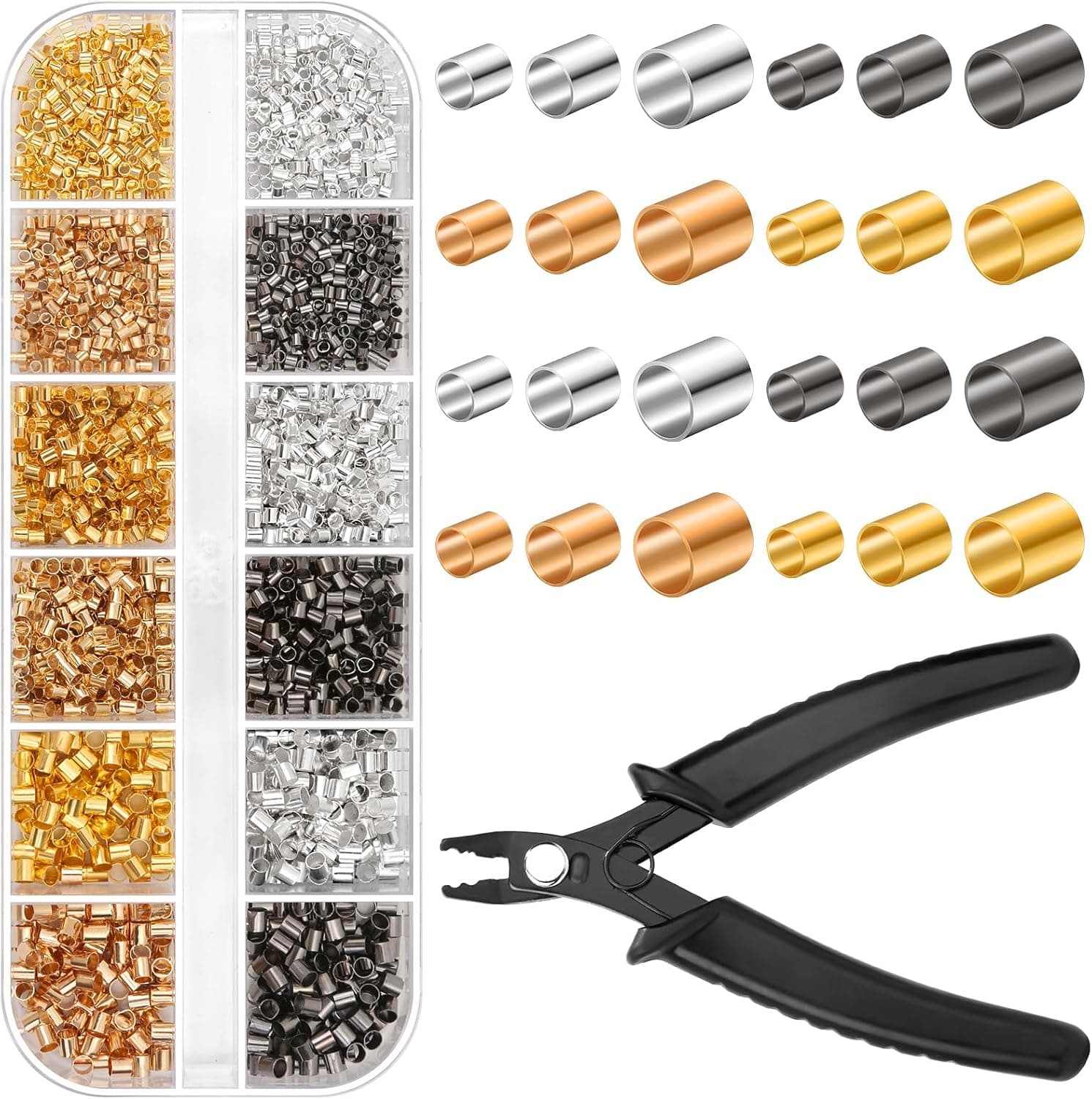
+ Crimping pliers included, so beginners get a complete setup
From our guide: Best Crimp Beads and Crimp Tubes for Secure Beading
+ Jump rings included to link dangles quickly to each hook
From our guide: Best Earring Hooks for Handmade Earrings: Comfort and Quality Picks
Popular right now
- Seed Bead Size ChartArticle
- Choosing Beading WireArticle
- Best Bead Reamers for Enlarging and Smoothing Bead HolesBuying guide
- Best Bead Spinners for Fast Seed Bead StringingBuying guide
- Best Crimp Beads and Crimp Tubes for Secure BeadingBuying guide
- Making Jewelry to SellArticle
Based on the last 28 days of search and visitor data.