Choosing Beading Wire
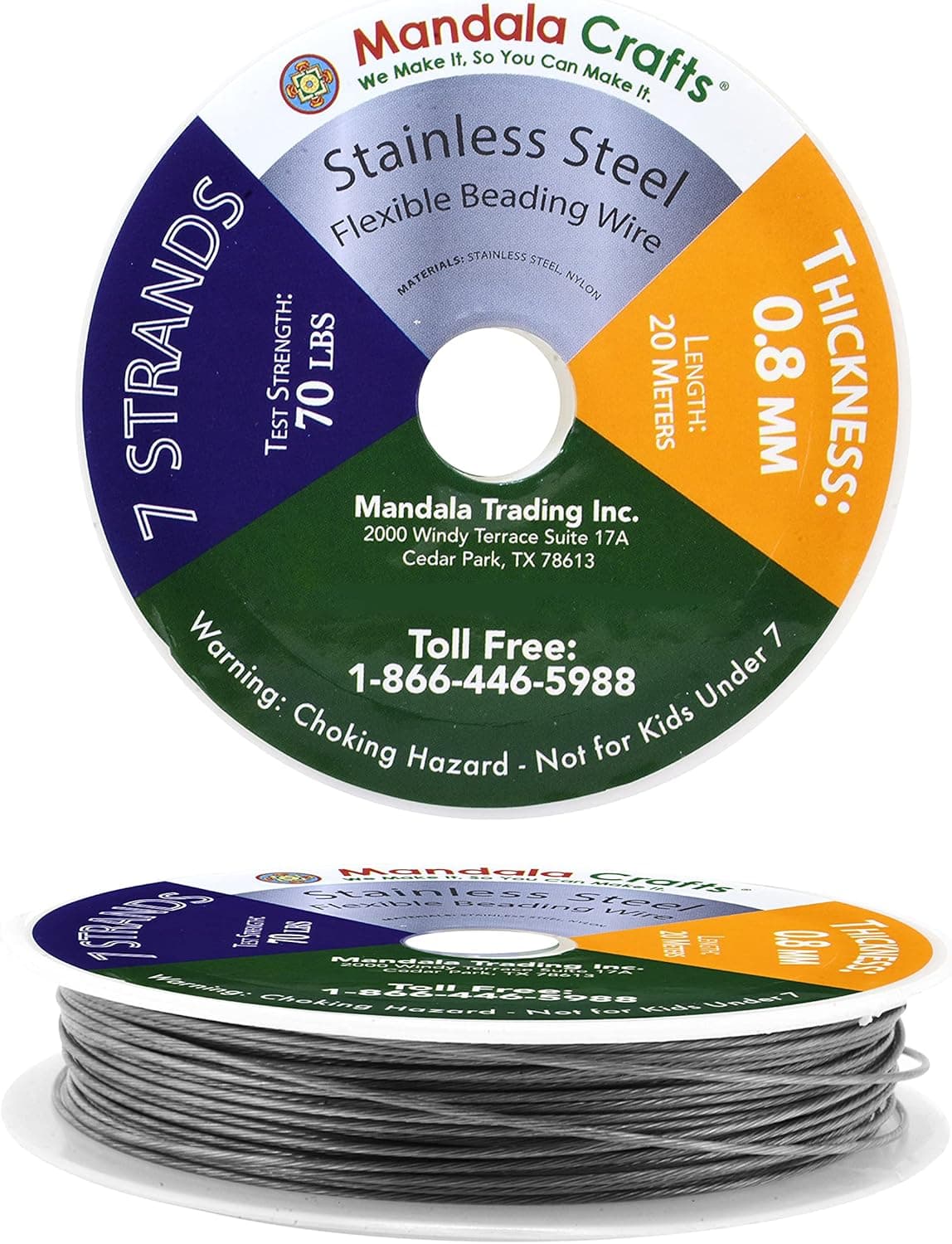
For everyday necklaces and bracelets in 6mm to 8mm glass or stone beads, use .019 inch beading wire in 19 or 49 strand. Size up to .024 for heavy statement pieces and bracelets that take abuse, and drop to .012 or .015 only for pearls and gem rondelles with tiny holes. Higher strand count means better drape and, more importantly, resistance to the permanent kinks that become failure points near the clasp. Flexible beading wire looks like simple string, but it is actually a miniature cable: multiple strands of stainless steel twisted together and coated in smooth nylon. Two numbers on the spool tell you almost everything, the diameter in inches and the strand count. Choosing them well determines whether a necklace drapes like liquid or hangs like a stick, and whether a bracelet survives years of wear or snaps at the clasp. Because the wire is usually invisible inside the beads, beginners tend to grab whatever is nearest, and that is how heavy bracelets end up strung on wire meant for seed beads.
Diameter: use the thickest wire your beads will take
Diameter is the first decision, and the guiding rule is to use the thickest wire that fits through your beads twice near the crimps. Common sizes run from .012 inch for lightweight designs and small pearls, through .015 for the middle ground, to .019 as the versatile everyday choice for glass and gemstone beads, and .024 for heavy stones and large-hole beads. Thicker wire resists stretching and abrasion better, which matters most on bracelets that bang against desks all day. If your beads have generous holes and the piece will carry weight, size up. Reserve the thin stuff for beads whose tiny holes leave no choice.
Strand count: why 49-strand drapes like thread
Strand count controls flexibility. A 7-strand wire is the entry level: strong, slightly stiff, fine for bracelets where drape is less visible. A 19-strand wire bends noticeably more smoothly and suits most necklaces. The premium 49-strand wire behaves almost like thread, draping beautifully and resisting kinks, which is why professionals default to it for anything they sell. Kink resistance is the underrated benefit; once a low-count wire creases, the kink is permanent and becomes the future failure point. If you have ever had a necklace develop a stubborn bend near the clasp, strand count was probably the culprit.
Match the wire to the bead material
Match the wire to the bead material as well as the weight. Crystal, cut glass, and some gemstones have sharp-edged holes that saw at wire with every movement, so they deserve heavier diameter and higher strand count. Pearls and small rounds are gentle and tolerate fine wire. Metal beads are heavy for their size, which pushes you toward thicker wire even when the design looks delicate. For long ropes that will be tugged by children or catch on scarves, some makers even double the wire. Also consider color: beading wire comes in silver, gold, bronze, and colored finishes, useful when the wire peeks through transparent beads.
A quick decision framework by project
A quick decision framework covers most projects. Everyday necklace of 6mm to 8mm glass or stone: .019 in 19 or 49 strand. Bracelet with the same beads: .019 or .024, 49 strand if the budget allows, because bracelets take the most abuse. Fine pearls or gem rondelles with tiny holes: .012 to .015, knowing the piece should be treated gently. Chunky statement necklace: .024 and a strong clasp. Buy small spools until you know your habits, then invest in a bulk spool of the size you reach for constantly, which for most people is .019.
Wire and crimps are a matched pair
Finally, remember that wire choice interacts with your crimps. Thicker wire needs larger crimp tubes, and premium wire deserves premium crimps, since the join is only as strong as its weakest part. Store spools with the wire end secured so it does not spring loose and tangle, and discard any section that has kinked. Good wire is one of the cheapest upgrades in beading: the difference in cost between budget and premium wire on a single necklace is small, but the difference in how the finished piece moves and lasts is something you can feel immediately.
Frequently asked questions
What size beading wire is most versatile? .019 inch is the everyday choice for glass and gemstone beads from about 6mm to 8mm, and most beaders end up buying a bulk spool of .019 once they know their habits.
Does strand count really matter? Yes. A 7-strand wire is stiffer and kinks permanently once creased, while 49-strand behaves almost like thread and resists the kinks that become failure points near the clasp.
What wire should I use for pearls? Pearls are often drilled at 0.5mm or smaller, so they need .012 to .015 inch wire or silk thread, and the piece should be treated gently.
Can I reuse beading wire from a broken necklace? No. Wire that has kinked or that failed once is announcing its age, so cut it off entirely and restring on fresh wire.