How to Make Flowers with Seed Beads: From a 60-Bead Wire Daisy to a French Beaded Rose
Published How we research
The fastest way to make a flower with seed beads is the wire loop method: string about 10 to 12 size 11/0 beads onto 26 or 28 gauge wire, twist the wire under them to close a loop, and repeat five or six times around the same point for the petals. For realistic, shaped petals you move to French beading, where rows of beads are wrapped around a central basic row on wire, and for a flower that sits flat on a bracelet or earring you use the daisy chain stitch on beading thread with no wire at all. This article walks through all three, with bead counts and wire gauges, then covers leaves, stems and the mistakes that make beaded flowers look floppy.
Beads, wire and thread that work for flowers
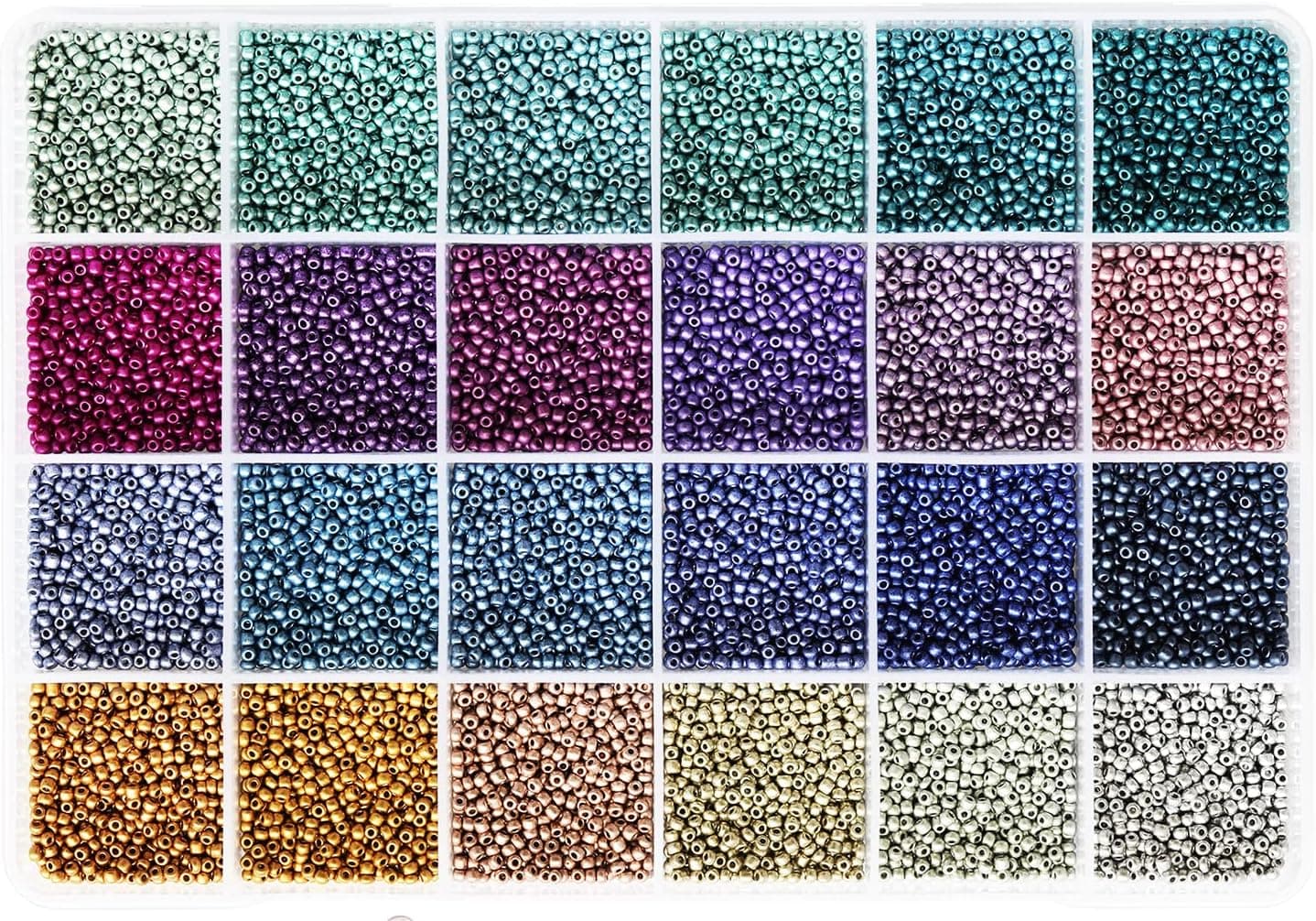
Size 11/0 round seed beads are the standard for beaded flowers: small enough to curve smoothly, large enough to string quickly. Size 8/0 beads make bigger, chunkier petals and are easier for a first attempt, and size 15/0 are used only for tiny centers and details. Use one brand and size within a flower so the petals match, and buy by the hank or in tubes of at least 20 to 25 grams, because even a small flower uses a few hundred beads and a layered rose runs into the thousands.
Wire flowers use craft wire in 26 or 28 gauge (about 0.4 mm and 0.3 mm). 26 gauge is stiffer and holds petal shape better; 28 gauge passes through 11/0 beads more easily and is the usual choice for small loop flowers and for French beading rows. Stems need something heavier, 18 to 20 gauge, which is wrapped with floral tape. Colored copper, enameled or plated wire looks best because the wire shows a little between beads; plain silver or gold tone are safe, green disappears into leaves.
Thread flowers use 6 lb braided beading thread or size D nylon with a size 10 or 12 beading needle. The braided thread holds the petals stiffer, nylon gives a softer flower that drapes with a bracelet. Either way, a bead mat with a light surface keeps the small beads from rolling while you count out petals.
Method 1: wire loop flowers (the quickest)
Cut about 18 inches of 26 or 28 gauge wire. Leave a 3 inch tail, then string 10 to 12 beads. Slide them to the tail end, bend the beaded section into a loop and twist the two wires together twice right under the beads to lock the loop. That is one petal. String the next 10 to 12 beads directly beside it and twist again, keeping each loop the same size, until you have five or six petals around the same center point. Twist all the remaining wire tightly together under the flower to form a short stem.
For a center, string one larger bead (a 6 mm round or a cluster of three to five 11/0 beads in yellow) onto a separate 3 inch piece of wire, push it down into the middle of the petals and twist its tails into the stem. For a fuller flower, make a second ring of five loops with 14 to 16 beads each and sit the first ring inside it. Loop petals can also be doubled: string 12 beads, loop, then string 20 and bring that loop around the outside of the first before twisting.
Counts to start with: a five-petal daisy of 10-bead loops uses 50 beads plus a center, so about 60 beads total; a forget-me-not is five loops of 6 to 8 beads; a sunflower is 12 to 16 loops of 16 to 20 beads around a flat center. Once the petals are formed, shape them by pinching the tip of each loop slightly to a point or leaving it round. These flowers sit on hair pins, rings, bobby pins and bracelet charms without any further work.
Method 2: French beading on a basic frame
French beading makes solid, shaped petals by wrapping rows of beads around a central row. Work from a spool of 28 gauge wire with beads strung directly onto it (a bead spinner with the wire held at a slight curve loads a few feet of beads in a minute). Make a loop in the wire about 4 inches from the end and twist it closed so you have a short twisted stem and a long working wire with beads on it. Slide a counted basic row onto the stem side: 5 beads for a round petal, 8 to 10 for a long one.
Bring the beaded working wire up the right side of the basic row, wrap it once around the top of the bare basic wire, bring it down the left side and wrap under the twisted stem. That is one row on each side. For a rounded petal, cross the wire at a right angle to the basic wire each time; for a pointed petal, cross at about a 45 degree angle, which pushes the beads up to a point. Keep adding rows, each slightly longer than the one inside it, until the petal is as wide as you want. Five rows gives a slim petal, nine or eleven a broad one.
A basic rose takes three sizes of petal: five small (5-bead basic, 5 rows), five medium (5-bead basic, 7 rows) and five or more large (5-bead basic, 9 to 11 rows), cupped by pressing a thumb into each one. Leaves use the same frame with a longer basic row of 10 to 15 beads and pointed tops and bottoms. After each petal, cut the top basic wire to about a quarter inch, fold it down behind the petal so no sharp end shows, and leave the twisted stem wires long for assembly.
Method 3: daisy chain flowers on thread
Daisy chain is the simplest thread-only flower and the one used for the popular seed bead flower bracelets. Thread a size 10 needle with about 5 feet of thread, pick up a stopper bead if you like, then pick up 8 petal beads in one color. Pass back through the first petal bead to close them into a ring. Pick up 1 center bead in a second color, then pass the needle through the petal bead on the opposite side of the ring (the fourth or fifth bead you strung) so the center bead sits in the middle. Pull snug: one flat flower.
To continue the chain, pick up a few connector beads (3 to 5 in the background color), then 8 more petal beads, and repeat the ring and center. For a bracelet of about 6.5 inches in 11/0 beads you need roughly 12 to 15 flowers depending on how many connector beads sit between them. Finish each end with 2 or 3 passes through the last few beads, tie a knot between beads, and attach a clasp with a jump ring or by stringing the thread through a bead tip.
A fuller thread flower is made with two rings: stitch an 8-bead daisy, then on the next pass pick up 2 beads between each pair of petal beads to add an outer ring of 16, which gives a 24-bead flower about 12 mm across. These flat flowers glue to earring posts and ring blanks with jewelry glue or sit on a chain through two of the outer beads.
Leaves, stems and assembling a bouquet
Loop leaves are made the same way as loop petals: two or three loops of 15 to 20 green beads twisted together, pinched to a point at the tip. French beaded leaves use a 10 to 15 bead basic with pointed ends, 5 to 7 rows. Make leaves in a slightly different green from the flower center so the flower reads as the focus.
To build a stem, hold the twisted wires of the flower against an 18 or 20 gauge stem wire and wrap the join with half-width floral tape, stretching the tape as you go so it sticks to itself. Add leaves one at a time 1 to 2 inches down the stem, wrapping over each join with another pass of tape. For heavy French beaded flowers, lash the petals to the stem first with a few turns of 30 to 34 gauge wire before taping, or the head will flop.
Cut every wire end flush before taping, because a sharp wire end works through tape and scratches. A flush cutter leaves a flat end; ordinary scissors crush the wire and go blunt. Wire ends that cannot be hidden inside a stem get folded back on themselves with chain nose pliers so no point is exposed.
Why beaded flowers go floppy, and fixes
Floppy petals almost always mean the wire is too thin for the petal size or the twists under each loop are loose. Loop petals longer than about 14 beads want 26 gauge rather than 28, and every loop needs two full twists directly under the beads with no gap of bare wire. In French beading, uneven rows come from inconsistent wrap angles: decide round or pointed before the first row and keep the same angle on every wrap.
Gaps of bare wire between beads come from stringing too few beads for a row and stretching them to fit. Slide the beads tight to the previous wrap before you cross the basic wire, and add beads rather than pulling. Wire that kinks has been bent back on itself; cut off the kink and twist on a fresh length instead of working past it, since a kink is where the wire will snap later.
Thread flowers that pucker were pulled too tight on the center bead pass. The center bead should sit level with the ring, not pull it into a cup. If the daisy chain twists along a bracelet, the connector beads between flowers are too few; three is the minimum in 11/0 for the chain to lie flat.
Frequently asked questions
What size wire goes through seed beads? 28 gauge wire (about 0.3 mm) passes through size 11/0 seed beads easily, including the second pass needed when a loop is closed through a bead. 26 gauge (0.4 mm) fits most 11/0 beads once and is the choice when a petal needs to hold its shape. 24 gauge is too thick for most 11/0 beads and is reserved for 8/0 and larger.
How many seed beads do I need for a flower? A five-petal loop daisy uses about 60 beads. A French beaded petal of 5 rows on a 5-bead basic takes about 60 to 70 beads, so a 15-petal rose with leaves is around 1,500 beads, roughly 15 grams of 11/0 beads. A daisy chain bracelet of 14 flowers uses about 180 beads plus connectors.
Can I make seed bead flowers without wire? Yes, with daisy chain, brick stitch or peyote on beading thread. Thread flowers are flat and flexible, which suits bracelets, earrings and sewn-on embellishment, but they cannot stand up on a stem. Any flower that needs to hold a three-dimensional shape has to be wired.
What is the easiest seed bead flower for a beginner? The wire loop daisy: five loops of 10 beads on 28 gauge wire and a single yellow bead center. It takes 10 to 15 minutes, needs only wire cutters, and teaches the twist that every other wire flower depends on. Move to a 5-row French beaded petal once your loops come out the same size every time.
Products from this article
The highest-scoring picks from the buying guides mentioned above. Scores are our editorial assessment, not customer ratings.
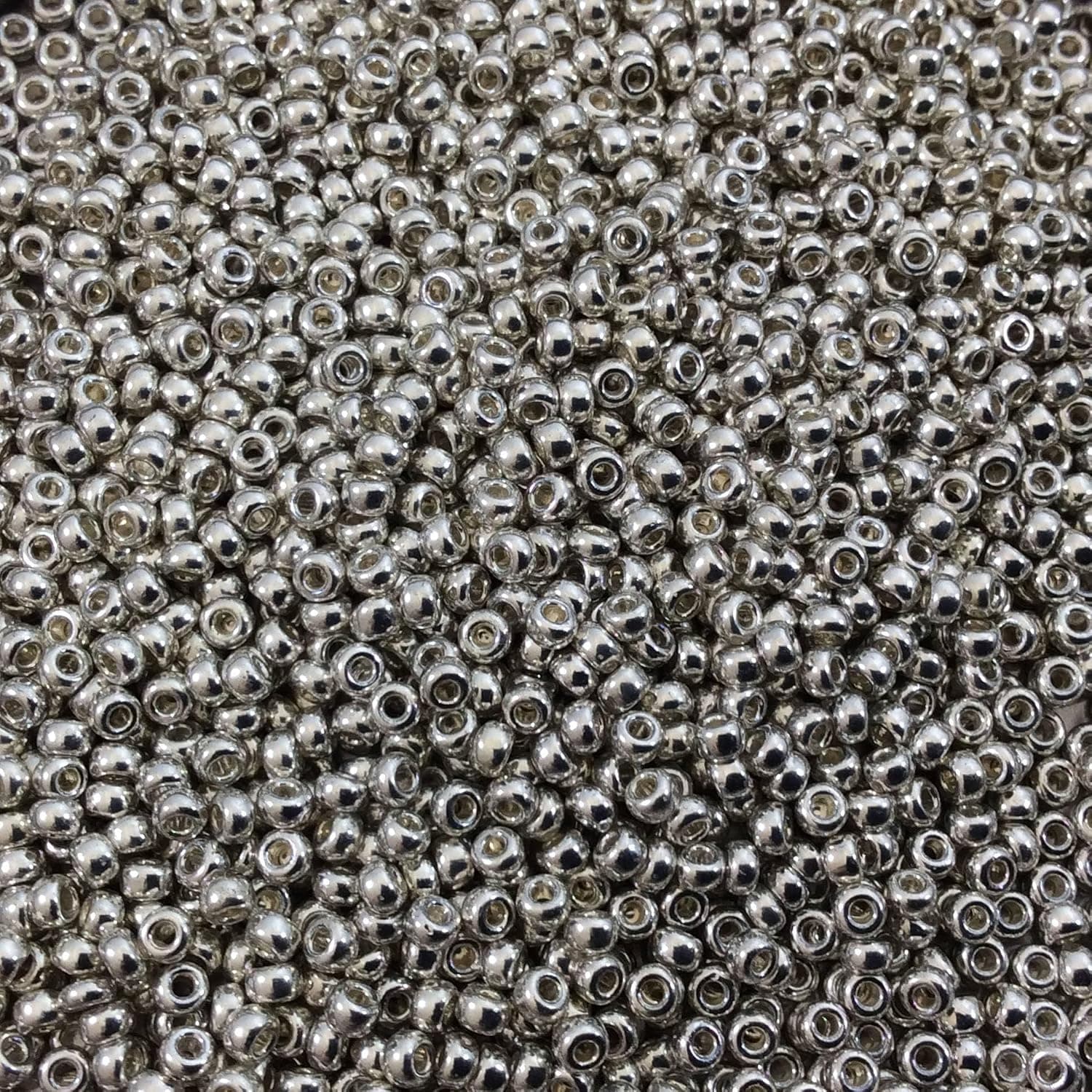
+ Miyuki rounds are known for uniform size, ideal for tight stitches
From our guide: Best Seed Beads for Beading Projects
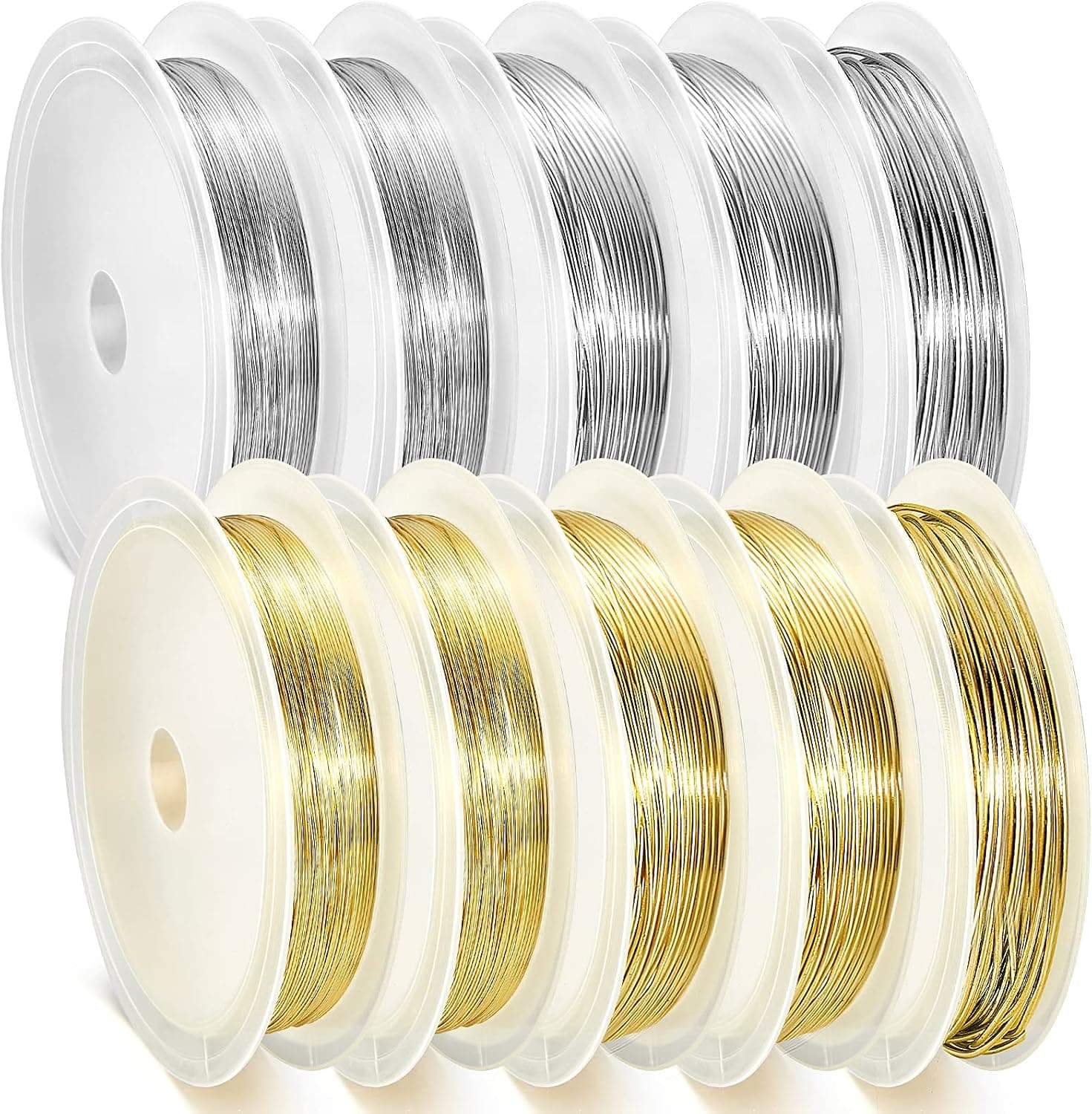
+ Five gauges cover everything from frames to fine weaving
From our guide: Best Craft Wire for Wire-Wrapped Jewelry
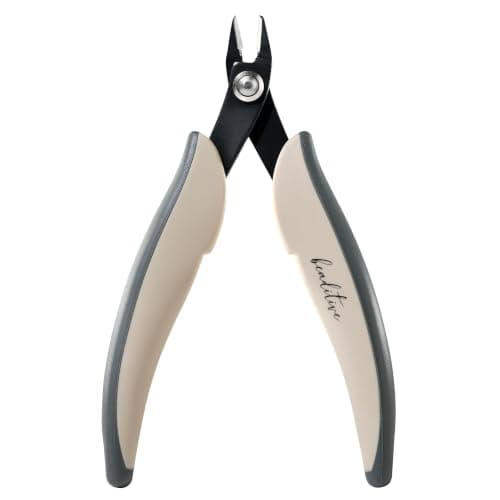
+ Blades are described as tightly aligned at the tips for clean, flush cuts on fine wire
From our guide: Best Wire Cutters for Jewelry Making: Flush Cuts Every Time
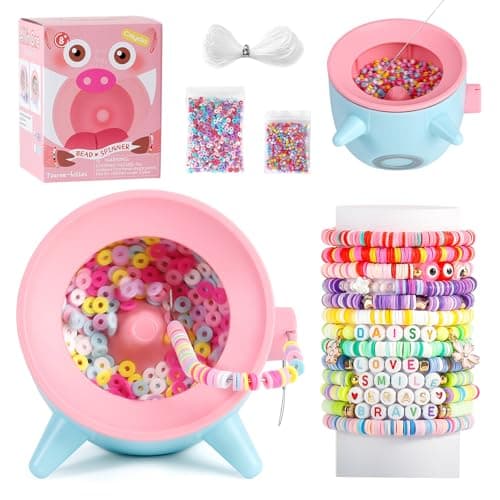
+ Dual modes handle both flat clay heishi beads and small seed beads in one machine
From our guide: Best Bead Spinners for Fast Seed Bead Stringing
Popular right now
- Seed Bead Size ChartArticle
- Choosing Beading WireArticle
- Best Jewelry Making Travel Cases for Crafting AnywhereBuying guide
- Best Bead Reamers for Enlarging and Smoothing Bead HolesBuying guide
- Best Bead Spinners for Fast Seed Bead StringingBuying guide
- Best Crimp Beads and Crimp Tubes for Secure BeadingBuying guide
Based on the last 28 days of search and visitor data.