How to Make a Clay Bead Bracelet: Planning a Pattern and Tying the Knot
Published How we research
Clay bead bracelets are flat little discs in soft colors that stack on the wrist in cheerful patterns, and they are one of the quickest bracelets to make. The skill is in the planning and the knot: a pattern that repeats cleanly, a length that fits and a knot that holds. This guide covers choosing beads and cord, planning the pattern, stringing with a needle, tying the knot and finishing so the bracelet lasts.
Products from this article
The highest-scoring picks from the buying guides this article links to. Scores are our editorial assessment, not customer ratings.
As an Amazon Associate we earn from qualifying purchases. This does not change our picks. Affiliate disclosure
New to Prime? Try Prime free for fast, free shipping on eligible items.
+ Large bead count supports many bracelets before any color runs out
From our guide: Best Clay Heishi Beads for Stackable Bracelets
+ Clear 0.5mm cord disappears inside translucent and seed bead designs
From our guide: Best Elastic Cord for Stretch Bracelets
+ Cover protects work in progress from dust and spills
From our guide: Best Bead Boards for Designing Necklaces and Bracelets
+ 6mm is the standard heishi size, so these beads mix cleanly with other heishi packs
From our guide: Best Clay Heishi Beads for Stackable Bracelets
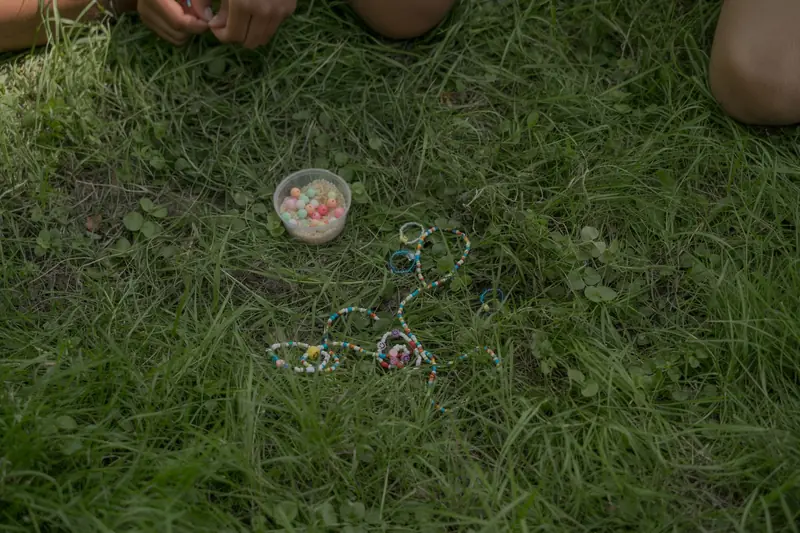
Choosing clay beads and cord
Heishi beads are thin polymer clay discs with a center hole, sold in strands or bags in many colors. Pick a size that you like, since thin discs give a fine, fabric-like band and thicker ones a chunkier look. Check that the beads are evenly sized, because large differences make the bracelet look uneven.
Use stretch cord that fits the bead holes. Many makers use cord around one millimeter thick, but check the hole size, because clay discs have narrow holes and thick cord will not pass. A cord that is too thin may snap more easily, so look for a type recommended for bracelets and buy a little extra for practice.
Planning the pattern
Lay the beads out on a bead mat or a bead board before you string. Try stripes, gradients, repeating groups or a mixture with a few gold spacers or a focal charm. Counting the beads in each group helps you keep the pattern consistent from end to end.
Measure the wrist and lay the beads along a ruler to see how many you need. The thickness of heishi beads varies by size and brand, so count them by measuring rather than guessing. Leave a little room for the knot, and plan to use a standard fit unless you want a snug one.
Color choices set the mood of the bracelet. Soft pastels look gentle, earth tones look natural and a bright mix feels playful. If you are unsure, limit the palette to three or four colors and repeat them in a steady order. You can always add a single contrasting bead later as an accent, and a neutral base keeps the whole thing harmonious.
Stringing the beads
Cut a length of cord that is longer than the bracelet, about six inches more than the wrist measurement, so you have enough to tie the knot. Thread the end of the cord through a needle with a large eye or use a twisted wire needle, and pick up the beads in your planned order. A tray with a groove keeps them in order.
Clay discs are delicate, so do not force them. If a bead does not slide on, check that the hole is not blocked, and swap it for another. A bead reamer can widen a tight hole, but use it gently, since the clay can chip.
Work at a table with good light and a mat, and keep spare beads nearby in case one cracks. Stringing a few beads at a time and sliding them down the cord is faster than picking up beads one by one. If your needle is struggling, try a different type, since a twisted wire needle with a large eye is often easier to thread than a thin one.
Tying a surgeon's knot
Bring the two ends of the cord together, with a small gap left between the beads to allow the knot to settle. Tie a surgeon's knot: cross one end over the other and pass it through twice, pull tight, then tie a simple overhand knot on top. Tug on the cord to settle the knot.
Check that the bracelet stretches enough to slip over the hand and then returns. If it feels tight, undo and add a bead or re-tie with a looser gap. Many makers add a tiny dot of clear glue to the knot, using only a little and following the instructions.
Practice the knot on spare cord before you tie the real bracelet, because a poorly tied knot is the usual reason a stretch bracelet comes apart. Pull the knot snug in stages, and wait a moment before you trim, so you can check that the bracelet sits comfortably. If the cord has any stretch memory, tug it a few times to take up the slack.
Hiding the knot and trimming the tails
Once the knot is firm, trim the tails to about a quarter of an inch, taking care not to cut the knot. If you have a bead with a large hole, slide it over the knot to hide it. Allow any glue to dry before you handle the bracelet.
Keep scissors sharp for a clean cut, and trim away from your face and fingers. Collect the offcuts, since pets and small children may try to swallow them.
Caring for clay bead bracelets
Clay beads and stretch cord do best when kept away from water, perfume, lotion and heat. Remove the bracelet before showers, swimming and workouts. Store it flat or in a small pouch so the cord is not stretched over a hook.
Elastic cord can weaken over time, so inspect the bracelet now and then and restring it if the cord looks worn. Taking off a bracelet by rolling it over the hand rather than pulling it on and off a tight wrist reduces strain.
Frequently asked questions
How many heishi beads do I need? It depends on the bead thickness and the wrist size, so lay a row along a ruler and count how many it takes to reach the length you want. Buy a few extra so you can swap any that crack.
Can I make them as gifts or to sell? Yes, many people do. Describe the materials honestly, add a care note and consider including a small spare length of cord.
Popular right now
- Seed Bead Size ChartArticle
- Choosing Beading WireArticle
- Best Jewelry Making Travel Cases for Crafting AnywhereBuying guide
- Best Bead Reamers for Enlarging and Smoothing Bead HolesBuying guide
- Best Bead Spinners for Fast Seed Bead StringingBuying guide
- Best Crimp Beads and Crimp Tubes for Secure BeadingBuying guide
Based on the last 28 days of search and visitor data.