Seed Bead Basics
Seed beads are the tiny glass beads that power bead weaving, loom work, and most intricate beaded jewelry. They are sold by size numbers that confuse nearly every newcomer because the system runs backward: the larger the number, the smaller the bead. An 11/0, spoken as eleven-aught, is the most common all-purpose size at roughly 2mm. An 8/0 is noticeably larger and friendlier to beginners, while 15/0 beads are the fine grains used for detailed work. The notation comes from old manufacturing conventions, and there is no need to memorize its logic; just remember that bigger number means smaller bead, and that 8/0 and 11/0 will cover most early projects.
Origin matters more with seed beads than with almost any other supply. Japanese seed beads from the major manufacturers are prized for uniformity: each bead in a batch matches its neighbors in size and hole diameter, which makes woven stitches lie flat and even. Czech seed beads are slightly more irregular and often a touch rounder, which lends organic character and usually costs less. Chinese hobby-store mixes are the cheapest and the least consistent, fine for kids and casual stringing but frustrating in precise stitchwork. If you plan to learn bead weaving, starting with Japanese 11/0 or 8/0 beads removes a whole category of avoidable frustration.
Beyond round seed beads, a few shapes are worth knowing. Cylinder beads, sold under names like Delica, are tube-shaped with thin walls and large holes, and they lock together like tiny bricks, which makes them the standard for peyote stitch and loom patterns with crisp, pixel-like results. Drop beads, cubes, and triangles add texture. Bugle beads are thin glass tubes that create sleek lines but have famously sharp edges, so experienced beaders guard the thread around them with a seed bead on each side. As a beginner you only need rounds and perhaps cylinders; the specialty shapes make more sense once a few stitches feel comfortable.
Finishes are where seed bead shopping gets seductive, and where a little knowledge saves disappointment. Opaque, transparent, and color-lined beads carry their color in or under the glass and wear well. Galvanized and dyed finishes can be gorgeous in the tube but may rub off with handling and skin contact unless labeled as a durable coating. Matte, metallic, and iris finishes each change how light plays across a piece. A practical habit: before committing a fancy finish to a bracelet that will see daily friction, rub a few beads between your fingers and soak one in water overnight. Two minutes of testing predicts years of wear.
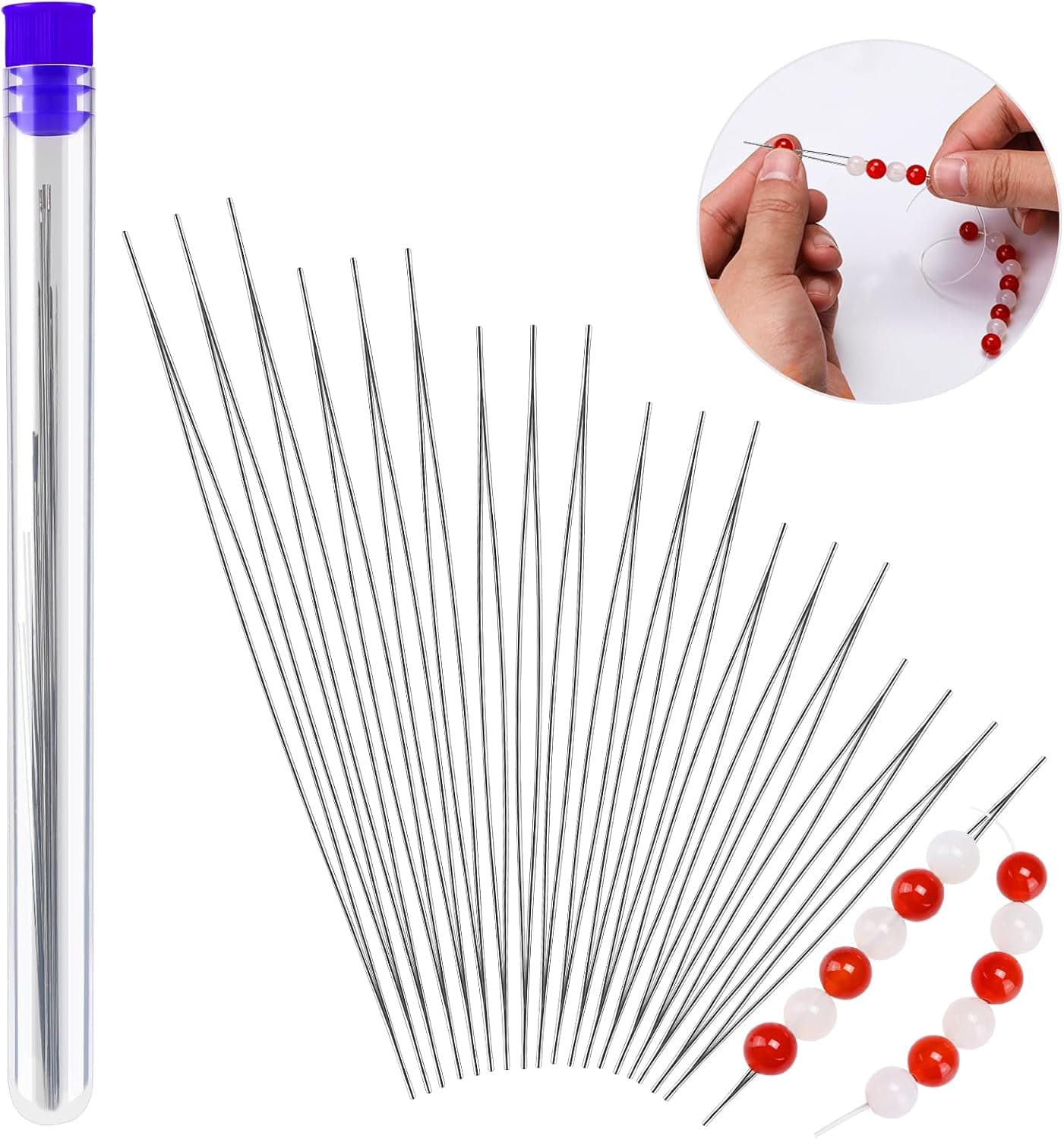
Thread and needles complete the kit. Seed bead work uses thin synthetic threads, either a nylon thread that knots softly or a strong gel-spun line that resists fraying, threaded on long, flexible beading needles in sizes 10 to 12. Pour beads into a shallow dish or onto a bead mat and scoop them onto the needle rather than trying to pick them up individually. For a first project, string a simple 8/0 necklace, then try a basic even-count peyote strip or a square stitch band. Both teach thread tension, the invisible skill that decides whether woven beadwork feels crisp or floppy.
Buy small quantities in a restrained palette at first, perhaps two neutrals and two accent colors, because seed beads are addictive and stash sprawl arrives quickly. Label every tube with size and color number the day it arrives; identifying a mystery bead later is nearly impossible. Most of all, accept the learning curve kindly. Your first woven rows will be uneven, and your tenth will not be. Seed beads reward patience with a level of detail and pattern no other jewelry medium can match.