Kids Beading Projects
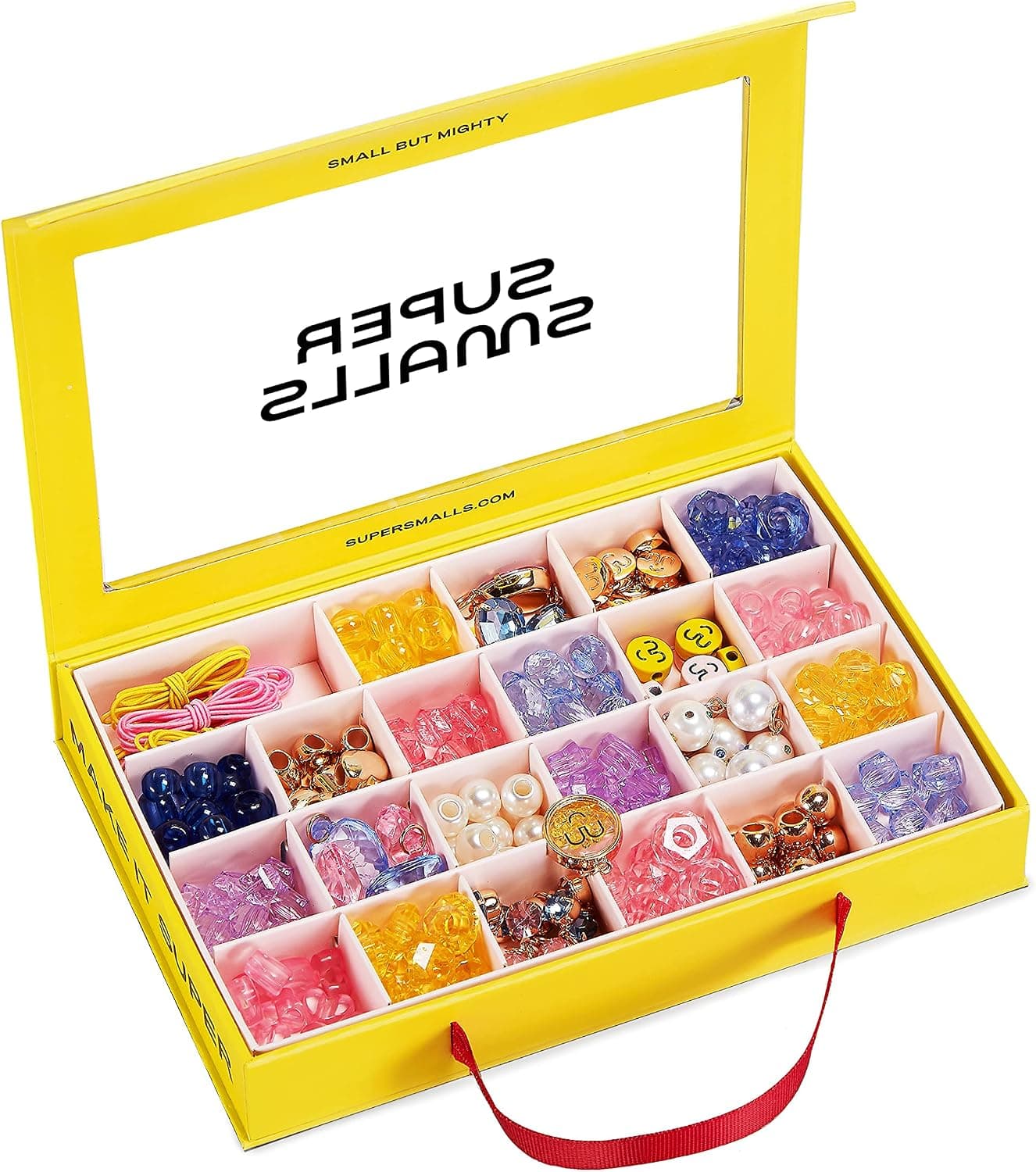
Preschoolers (3-5) need chunky beads on shoelace or pipe cleaner, with non-negotiable supervision for choking hazards. Early school age (6-9) unlocks friendship jewelry like name bracelets on elastic cord, with adults still tying final knots. Tweens (10-12) can handle glass beads, real elastic cord, memory wire, and basic techniques like the surgeon's knot under supervision. Regardless of age, set up with a rimmed tray to catch escaped beads, a muffin tin for sorting colors, and sessions kept to twenty to forty minutes. The payoff is real skill development, sequencing, measurement, and generosity through gift-giving, that outlasts the craft itself. Beading is one of the best first crafts a child can learn. It builds fine motor control, sequencing and pattern recognition, planning, and the deep satisfaction of wearing something you made an hour after starting it. It is also inexpensive, quiet, and portable. The trick for adults is matching the project to the child's development stage, because a project pitched one year too advanced produces tears and spilled beads, while one pitched right produces focused silence followed by a proud reveal.
Preschoolers around ages three to five: think big
For preschoolers around ages three to five, think big: chunky wooden or plastic beads with holes wide enough for a shoelace, plastic lacing cord, or a pipe cleaner, whose built-in stiffness makes it the ideal first needle. Projects at this age are really threading practice dressed as jewelry, so keep sessions short and celebrate any strung sequence as a finished necklace. Pattern games emerge naturally, red, blue, red, blue, and are genuinely valuable early math. Supervision is non-negotiable because beads at this age are a choking hazard; choose beads too large to swallow, count them out before and after, and put the supply away between sessions. Pony beads on pipe cleaners twisted into rings and bracelets are the reliable crowd-pleaser of this tier.
Early school age unlocks classic friendship jewelry
Early school age, roughly six to nine, unlocks classic friendship jewelry. Pony beads and letter beads on elastic cord make name bracelets, the single most requested kids' project ever devised. Introduce simple planning: lay out the design on a towel before stringing, count beads to fit the wrist, and sound out names with letter beads. An adult should still tie and glue the final knots, since a well-tied surgeon's knot is the difference between a bracelet that lasts and one that explodes at recess. This age also loves themed projects, team colors, birthstone colors, holiday palettes, and small looms or bead-pegboard kits that produce fused designs. Expect and encourage gifting; making jewelry for friends is half the appeal.
Tweens can handle genuine techniques and real materials
Tweens from about ten to twelve can handle genuine techniques and real materials. Glass beads, proper elastic cord they tie themselves, memory wire bracelets that need only loop-ended finishing, and basic head-pin earrings with an adult managing or supervising the pliers all fit here. This is the age to teach the actual skills: pre-stretching elastic, the surgeon's knot, opening jump rings with a twist rather than a pull. Many tweens can follow written or video patterns independently, and some will sprint ahead into seed beads and weaving if allowed. A small dedicated kit of their own, tools, a mat, an organizer with earned beads, signals that the craft is being taken seriously and tends to sustain interest far longer than a communal craft bin.
The setup determines the experience at any age
Whatever the age, the setup determines the experience. Work over a rimmed baking sheet or a tray lined with a towel so escaped beads are caught rather than scattered, and put a bead mat or towel down as the working surface because beads roll off bare tables maddeningly. Sort colors into a muffin tin or egg carton for little hands. Good light matters for small eyes as much as old ones. Keep sessions inside the child's attention span, which is usually twenty to forty minutes, and end while it is still fun. Adhesives, sharp cutters, and fine wires stay in adult hands until earned.
The quiet payoff of kids' beading arrives later
The quiet payoff of kids' beading arrives later. A child who has strung patterns has practiced sequencing; one who has planned a bracelet to fit a wrist has done applied measurement; one who has given away a handmade gift has learned something about generosity that no purchased present teaches. Keep a small gallery, photos or a box of retired favorites, because children revisit their own progress with real pride. And be warned in the nicest way: many adult beaders trace their obsession to a childhood bin of pony beads, so you may be starting something that outlasts the summer.
Frequently asked questions
What beading projects are safe for preschoolers? Chunky wooden or plastic beads with holes wide enough for a shoelace, plastic lacing cord, or a pipe cleaner, with beads too large to swallow and non-negotiable supervision since beads at this age are a choking hazard.
What is the best first beading project for a 6 to 9 year old? Name bracelets using pony beads and letter beads on elastic cord, the single most requested kids' project, with an adult still tying and gluing the final knots for durability.
What beading techniques can tweens learn? Pre-stretching elastic, tying a surgeon's knot, and opening jump rings with a twist rather than a pull, along with using glass beads, memory wire bracelets, and basic head-pin earrings under supervision.
How long should a kids' beading session last? Usually twenty to forty minutes, matching a child's typical attention span, and it's best to end the session while it's still fun rather than pushing past that window.