Jewelry Wire Gauge Chart: Which Gauge for Loops, Wraps, Pins and Ear Wires
Published How we research
Wire gauge is a numbering system that runs backward: the bigger the number, the thinner the wire. A 28 gauge wire is a fine thread, while 16 gauge is a stiff rod. Getting the gauge wrong shows up quickly, as loops that will not close, ear wires that bend out of shape or beads that will not slide on. This chart converts common American Wire Gauge sizes to millimeters and describes the jobs each size is usually chosen for, plus how to match wire to bead holes.
Products from this article
The highest-scoring picks from the buying guides this article links to. Scores are our editorial assessment, not customer ratings.
As an Amazon Associate we earn from qualifying purchases. This does not change our picks. Affiliate disclosure
New to Prime? Try Prime free for fast, free shipping on eligible items.
+ Five gauges cover everything from frames to fine weaving
From our guide: Best Craft Wire for Wire-Wrapped Jewelry
+ 304 stainless steel does not rely on plating, so there is no coating to wear through
From our guide: Best Head Pins and Eye Pins for Earrings and Bead Dangles
+ Blades are described as tightly aligned at the tips for clean, flush cuts on fine wire
From our guide: Best Wire Cutters for Jewelry Making: Flush Cuts Every Time
+ Four gauges cover frames, loops and fine wraps in one pack
From our guide: Best Craft Wire for Wire-Wrapped Jewelry
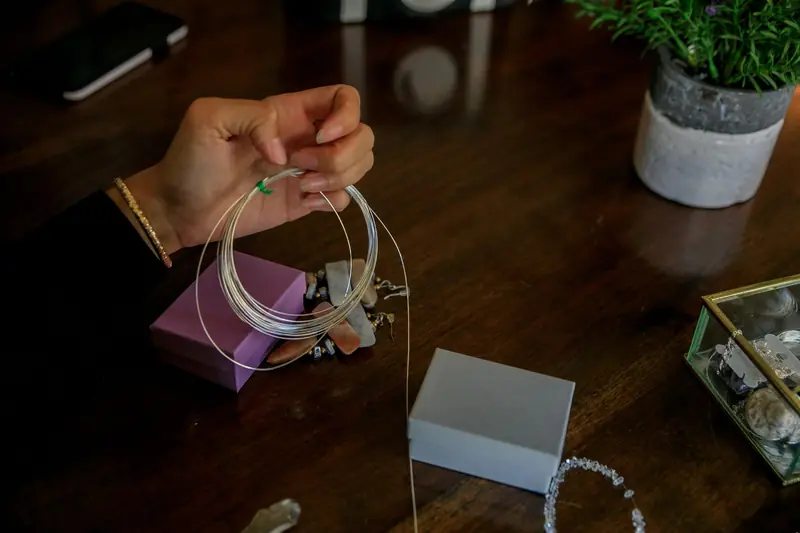
How wire gauge numbers work
In the American Wire Gauge system, each step up in number makes the wire thinner. Gauge sizes are standardized, so the same number means the same diameter across suppliers. Wire is sold in gauge for jewelry in the United States, while many suppliers elsewhere list millimeters, which is why a conversion chart is useful.
Gauge refers to the diameter of the wire, not its hardness. Wire is also sold in tempers such as dead soft, half hard and full hard, which describe how it bends and springs. The same gauge in a harder temper holds its shape better but is harder to shape by hand. Check the product description for both.
A simple way to remember the system is that every three gauge steps roughly halves or doubles the cross-sectional area of the wire. That is why moving from 20 to 22 gauge feels like a noticeable change in stiffness and strength, even though the numbers are close. Keep this in mind when you swap one gauge for another in a pattern.
Wire gauge chart in AWG and millimeters
16 gauge: about 1.29 mm. 18 gauge: about 1.02 mm. 20 gauge: about 0.81 mm. 21 gauge: about 0.72 mm. 22 gauge: about 0.64 mm. 24 gauge: about 0.51 mm. 26 gauge: about 0.40 mm. 28 gauge: about 0.32 mm. 30 gauge: about 0.25 mm.
Measured values can differ slightly from these standard figures, since wire is made to tolerances and plating adds a little. If your project depends on a tight fit, such as passing wire through a small bead hole, check the actual wire with a caliper or a wire gauge tool rather than relying only on the label.
Which gauge for which job
Heavier wire such as 16 to 18 gauge is often used for structural parts: ear wires, bangles, large jump rings and the frame of wire-wrapped pieces. The stiffness helps the piece keep its shape, although it takes more effort and sturdier pliers to bend. Check the wire against ear piercings, since thicker wire may not fit some earlobes.
Medium wire at 20 to 22 gauge is a workhorse for head pins, eye pins, wrapped loops and clasps. 21 gauge is a common size for ready-made head pins, and many bead holes accept it. Fine wire at 24 to 28 gauge suits wrapping around stones, binding and delicate weaving, where flexibility matters more than strength.
If you are unsure, test a short length of two neighboring gauges with the same bead and pliers. The difference in how each bends, how it fills the hole and how it feels in the hand is easier to judge in practice than from a chart, and the test costs very little time. Keep a note of which gauge worked for each project so you can repeat it.
Matching wire to bead holes
The wire has to pass through the bead, so measure the hole first. Many gemstone and glass beads have holes large enough for 20 or 21 gauge wire, while pearls and some crystals have smaller holes that need thinner wire. If wire does not fit, you can sometimes enlarge a hole with a bead reamer, though this should be done carefully and with the right eye and dust protection.
If you plan to use a wrapped loop above a bead, remember that the wire passes through the bead once and then wraps around itself, so the part that goes through the bead is a single strand. A tight fit helps keep the bead from rattling on the wire, but a fit that is too tight can crack a delicate bead.
Gauge for jump rings and wrapped links
Jump rings are typically made from 18 to 22 gauge wire, and the choice affects both strength and how easily they open. Thicker rings hold heavier pendants and take more force to open, while thinner ones are easier to work but can pull apart under load. Choose a gauge that is in proportion to the weight of the piece.
For handmade chain links, many makers pick 20 gauge for fine chain and 18 gauge for a stronger look. Practice with copper or craft wire first before using precious metal.
Tools and safety for working wire
Use flush cutters for clean cuts and a pair of chain nose and round nose pliers for shaping. Heavier gauges need stronger tools, and cutting hard wire with small cutters can damage them. Wear safety glasses, because clipped ends can fly, and keep the offcuts in a small container so they do not end up on the floor or in skin.
File or sand the cut end of any wire that will touch skin, since a rough or sharp end can scratch. A fine file or a polishing cloth gives a smooth finish.
Frequently asked questions
What gauge wire is best for beginners? Many makers suggest starting with 20 or 22 gauge in a soft temper, since it bends easily and is strong enough for loops and wraps. Try a small spool before buying more.
Is beading wire measured in gauge too? Beading wire is usually sold by diameter in inches or millimeters and by strand count, so see our guide on choosing beading wire for that.
Popular right now
- Seed Bead Size ChartArticle
- Choosing Beading WireArticle
- Best Jewelry Making Travel Cases for Crafting AnywhereBuying guide
- Best Bead Reamers for Enlarging and Smoothing Bead HolesBuying guide
- Best Bead Spinners for Fast Seed Bead StringingBuying guide
- Best Crimp Beads and Crimp Tubes for Secure BeadingBuying guide
Based on the last 28 days of search and visitor data.