Repairing Broken Jewelry
Most broken jewelry is disconnected, not destroyed, and fixable at home with two pairs of pliers and a few findings. Identify the failure point and gather every bead first. Re-close opened jump rings with a twist, replace snapped stringing material entirely rather than knotting it, and reshape or replace bent ear wires. Leave soldering, prong resetting, precious-metal work, and fine pearl restringing to a bench jeweler. Most broken jewelry is not really broken; it is disconnected. A clasp that fell off, a jump ring that opened, a strand that let go at one end, these account for the majority of pieces languishing in repair drawers, and nearly all of them are fixable at home with two pairs of pliers and a handful of findings. Learning basic repair is doubly rewarding: it rescues pieces with sentimental value that no store can replace, and every repair teaches you exactly how jewelry fails, which quietly improves everything you make from scratch.
Triage: find the failure point first
Triage comes first. Examine the piece under good light and identify the failure point: an opened jump ring, a stretched or snapped stringing material, a broken ear wire, a clasp that no longer springs shut, or a cracked bead. Then check what survived. If a necklace snapped, gather every bead immediately and store them in a zip bag, and note or photograph the original stringing order if any of it remains intact, because reconstructing a graduated or patterned strand from a loose pile is the hardest part of the whole job. Most repairs need under thirty minutes; the exceptions are worth recognizing early, which is what the final paragraph is for.
The most common repair: jump rings and clasps
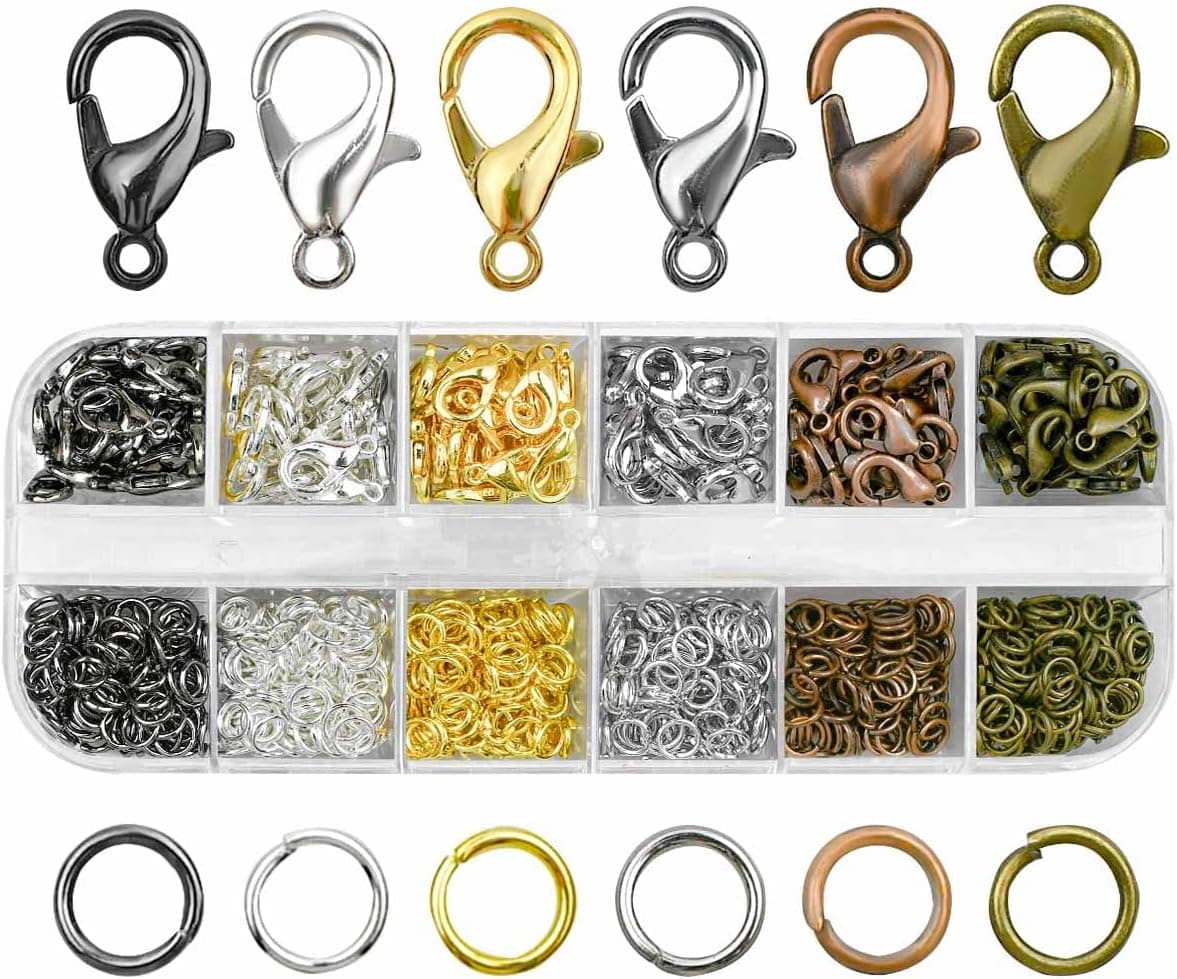
The most common repair in existence is the jump ring failure, a charm or clasp that dropped off because its ring pulled open. Grip the ring on each side of the gap with two pliers, twist it closed so the ends meet flush, and work the joint back and forth slightly to stiffen it. If the ring is visibly distorted or thin, replace it with a new one in a heavier gauge, and if the same connection fails repeatedly, upgrade to a split ring or a soldered ring plus new clasp. Clasp replacement itself is nearly as easy on chain: remove the old clasp's ring, twist a new ring through the end link and the new clasp, and close it properly. Five minutes, and the necklace returns to service.
Restringing a snapped strand
Snapped strands ask for restringing, which is more patience than skill. Cut off the old material entirely rather than knotting a break, because stringing material that failed once is announcing its age. Rebuild the layout on a towel or bead board, restring on fresh flexible beading wire, and finish both ends with new crimp tubes and, ideally, wire guards; a restrung necklace done this way is stronger than it was originally. Stretch bracelets that snapped get the same treatment with fresh elastic, a pre-stretch, a surgeon's knot, a dot of appropriate glue, and the knot hidden inside a bead. While the piece is apart, inspect beads for cracked edges and sharp holes, and retire any bead that likely sawed through the old cord, replacing it with a spacer or a survivor from your stash.
Earring repairs
Earring repairs cluster into a few patterns. A bent ear wire can be reshaped with chain nose pliers or replaced outright for pennies, and replacement is usually smarter since fatigued wire breaks again. A dangle that dropped off its wire needs its loop reformed or a fresh jump ring. Lost single earrings can become pendants, and a surviving pair member can be duplicated if you can match the beads. Rings with loose glued stones can be reset with a proper jewelry adhesive after cleaning both surfaces, clamping gently, and curing fully. Keep a small repair kit, assorted jump rings, ear wires, crimps, a coil of beading wire, elastic, and glue, and most household jewelry emergencies become same-day fixes.
What to leave to a professional
Equally important is knowing what not to attempt. Soldering, prong resetting of faceted stones, chain welding, resizing precious rings, and anything involving significant gold, platinum, or valuable gems belongs with a professional bench jeweler, where the repair cost is small insurance against ruining an irreplaceable item. The same is true of antique pieces whose value depends on originality, and of strands of fine pearls, which deserve professional restringing with knots. Everything else, which is honestly most of what breaks, is within reach of a careful amateur, and the drawer of broken jewelry in nearly every home is an ideal free practice syllabus.
Frequently asked questions
Can I just tie a knot in a necklace that broke? No. Stringing material that failed once is announcing its age, so cut it off entirely and restring on fresh flexible beading wire with new crimps.
My clasp fell off, can I fix it? Usually in five minutes. Remove the old clasp's ring, twist a new jump ring through the end link and the new clasp, and close it flush.
What jewelry repairs should I not try at home? Soldering, resetting faceted stones, chain welding, resizing precious rings, anything with significant gold, platinum or valuable gems, antique pieces, and fine pearl strands that need knotted restringing.
How do I fix a stretch bracelet that snapped? Restring on fresh elastic, pre-stretch it, tie a surgeon's knot, add a dot of glue, and hide the knot inside a bead. Inspect the beads for sharp holes while it is apart.