Round Nose Pliers, Wire Jewelry Making Tools Bead Pliers for Wire Wrapping, Jump Rings Making, Jewelry Making Supplies, DIY Craft Review (2026)
Updated September 21, 2026 · Research-based review
Our verdict
A basic pair of round nose pliers for looping wire and closing jump rings, sold without a stated brand or detailed material spec. It works as a low cost spare or classroom tool, but buyers should not expect the finish or comfort of a name brand plier.
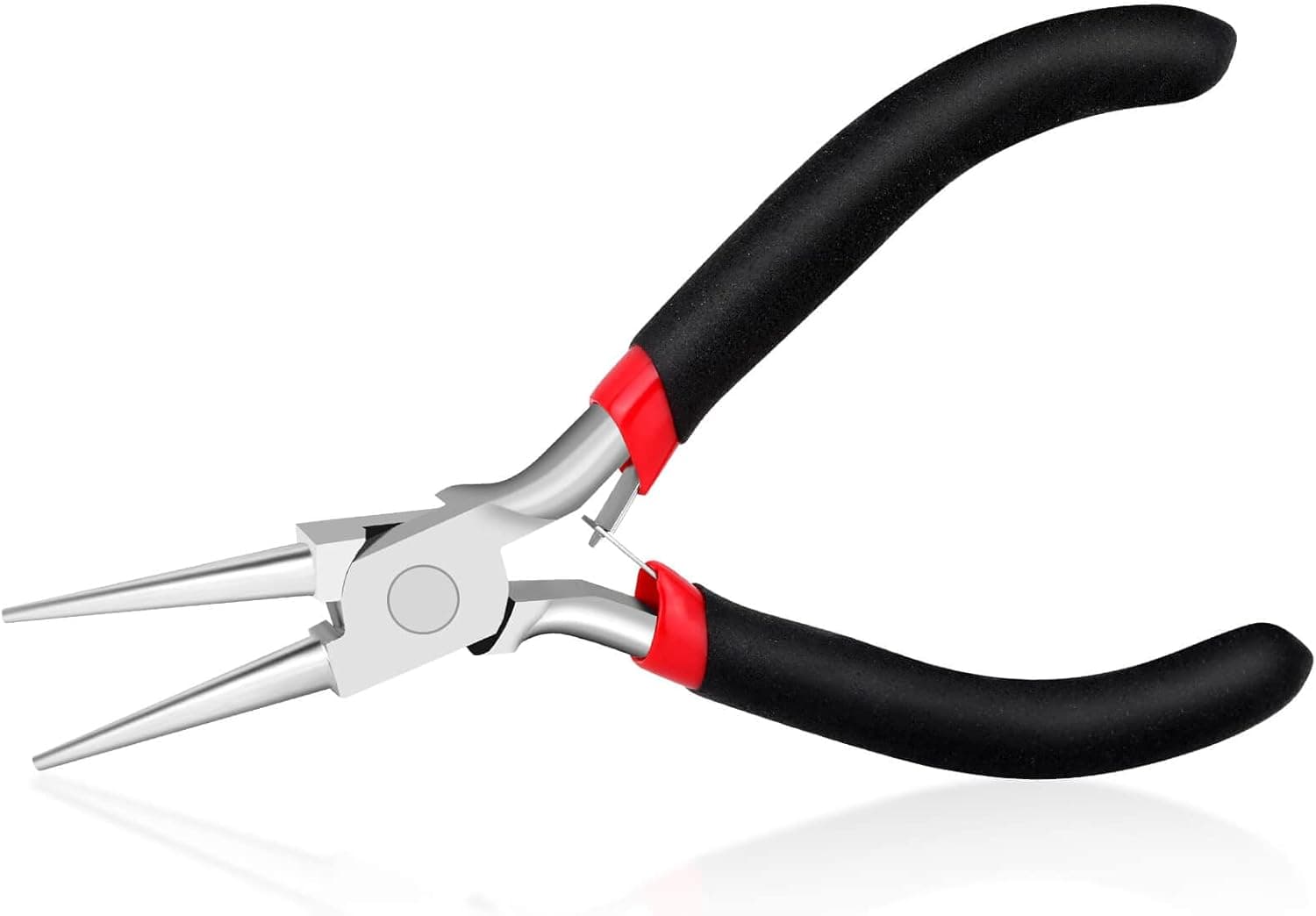
Generic round nose pliers for wire wrapping, jump ring making and DIY jewelry craft projects.
Price range: See on Amazon
What we liked
- + Round jaws can wrap wire around to form jump rings
- + Useful for wire wrapping stones and making bails
- + Inexpensive spare plier for a craft station or class
Trade-offs
- - Check the jaw material and handle comfort before buying
- - Handle comfort and jaw finish are unknown before buying
What round nose pliers are used for
Round nose pliers have two smooth, tapered, cone shaped jaws rather than flat gripping surfaces, which lets the jaws form curves and loops in wire instead of leaving flat dents behind. That shape makes them the standard tool for turning the end of a wire into a small loop, such as the loop at the top of a headpin or the loop that closes a wrapped wire link. Because the jaws taper from wide at the base to narrow at the tip, the same plier can form a range of loop sizes depending on where along the jaw the wire is positioned. This listing markets the tool specifically for wire wrapping and forming jump rings, both common steps in handmade earring and bracelet construction.
What the listing tells buyers
The title and description describe general use cases, wire wrapping, jump ring making and DIY jewelry craft, but do not name a manufacturer, specify the metal the jaws are made from, or give a jaw finish such as polished or matte. Some versions of this style of listing describe hardened steel construction and a rubber or sponge grip handle, though buyers should confirm those details on the current listing page rather than assume they carry over, since generic tool listings are sometimes updated or resupplied by different manufacturers over time. Shoppers who want a guaranteed material and finish should look for a listing that states the jaw material directly rather than relying on the product photos alone.
Where a plier like this fits in a toolkit
A simple, inexpensive round nose plier makes sense as a backup tool kept at a second work station, a loaner for a beading class, or a first plier for someone testing whether wire wrapping is a hobby worth investing more in. It is not the ideal choice as a single primary tool for someone doing wire work daily, since jaw finish quality affects how cleanly a loop forms and whether the wire picks up scratches during shaping. For frequent use, a plier from an established jewelry tool brand with a stated hardened steel jaw and a documented warranty is generally the safer long term investment.
Handling wire without marking it
One common complaint with unbranded pliers in this price range is jaw texture: a poorly finished or lightly serrated jaw can leave faint tool marks on soft wire such as sterling silver or gold filled wire, which shows up as a dull streak inside a finished loop. Smooth, well polished jaws avoid this, but a listing that does not specify the finish leaves that detail uncertain until the tool arrives. Beaders working with anodized aluminum wire or coated craft wire have more room for error, since scratches are less visible on those finishes than on bare polished silver or gold wire.
Realistic expectations for the price
Tools sold under generic or storefront specific names rather than an established jewelry tool brand tend to sit at the lower end of the price range, and this listing fits that pattern. That can be a reasonable tradeoff for occasional use or as a spare, but buyers should expect variation in comfort, jaw alignment and durability compared with pliers from brands that specialize in jewelry tools and publish detailed material specs. Reading the current listing's bullet points and any recent buyer photos before ordering is the best way to confirm what is actually included, since specifics can shift between restocks on unbranded tool listings.
Frequently asked questions
What are round nose pliers used for in jewelry making?
Their smooth, tapered jaws are used to form loops and curves in wire, such as the loop at the top of a headpin or a wire wrapped link, and to help close jump rings.
What material are the jaws made from?
The listing does not specify a jaw material, so buyers should check the current product page for that detail before ordering.
Is this a good primary tool for daily wire work?
It can work for occasional or beginner use, but frequent wire workers usually get more consistent results from a plier with a stated hardened steel jaw from an established jewelry tool brand.
Prices change often, so check the current price and availability on Amazon.
Check price on AmazonBeading Nest may earn a commission from the link above.