The Beadsmith Bead Board, Grey Flocked, 3 U-Shaped Channels, 6 Recessed Compartments, 9.5 x 13 inches Review (2026)
Updated September 14, 2026 · Research-based review
Our verdict
This grey flocked bead board gives beaders three U-shaped channels to plan multi-strand necklaces and bracelets before stringing, plus six recessed wells to hold loose beads and findings. It has no lid, so a bumped table can spill a half-finished layout, and its 9.5 by 13 inch footprint takes more shelf space than a rollable bead mat.
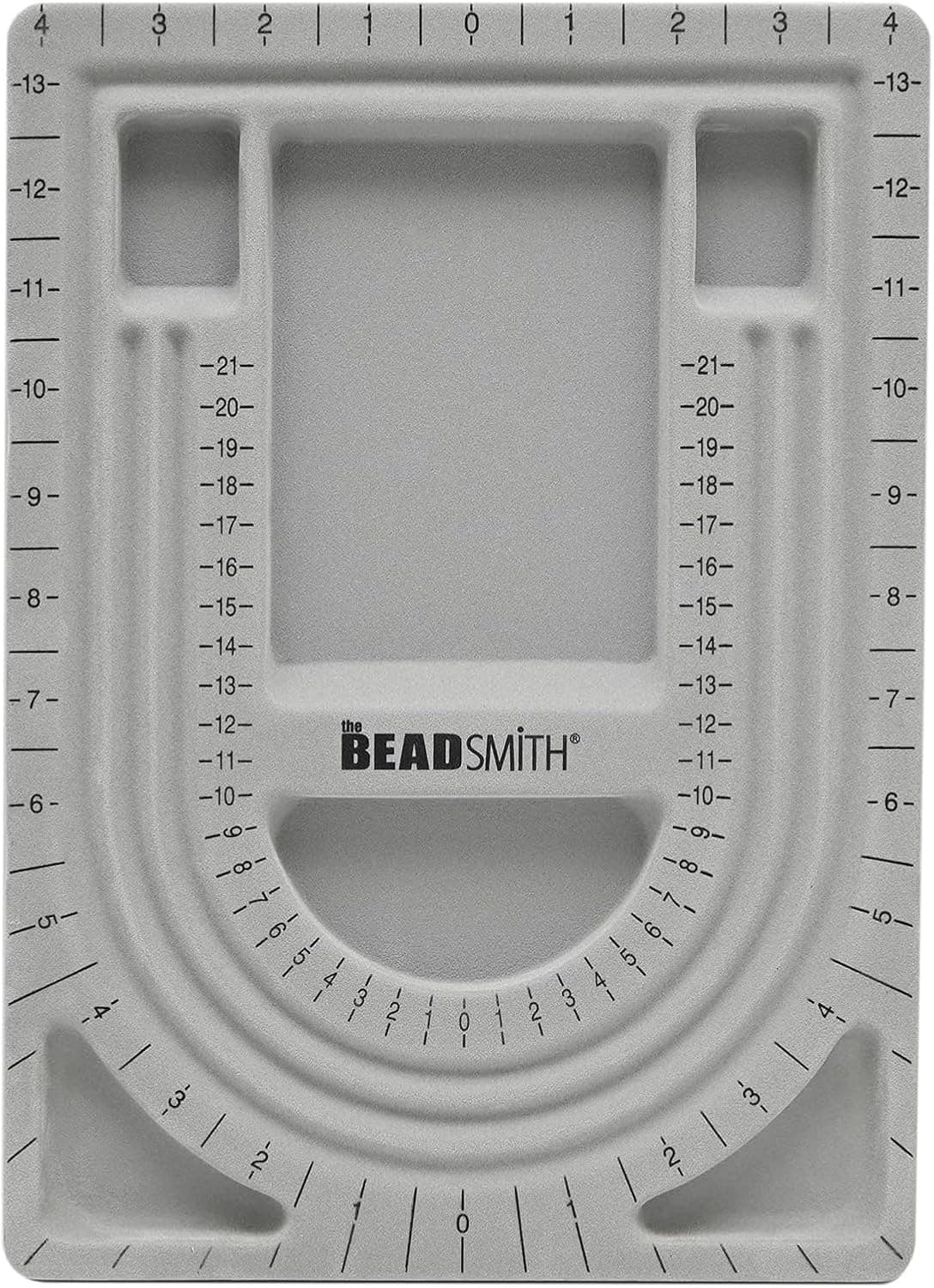
The Beadsmith grey flocked bead board, 3 U-shaped channels and 6 recessed compartments, 9.5 x 13 inches.
Price range: See on Amazon
What we liked
- + U-shaped channels map out necklace lengths before stringing
- + Recessed compartments hold beads during design
- + Flocked surface prevents beads rolling off the board
Trade-offs
- - No cover, so work can spill if the board is bumped
- - Board is bulky to transport compared with bead mats
Who a bead board is for
Stringing beads in the right order sounds simple until a design calls for a graduated pattern, a repeating sequence, or matching lengths across multiple strands, at which point laying everything out first becomes essential. The Beadsmith board is built for exactly that planning stage, before a single bead is threaded onto wire or cord. It suits anyone making necklaces, bracelets or multi-strand pieces who wants to see the finished layout and check lengths against a body measurement before committing. Beginners benefit from the printed channel measurements that take the guesswork out of matching left and right sides of a design, while experienced beaders use the board to test color and size combinations quickly since beads can be nudged around before any knotting or crimping locks them in place.
Channels, compartments and surface
The board's three U-shaped channels are the main design surface, curved to mimic how a necklace or bracelet drapes, with length markings printed along their length in inches and centimeters according to the manufacturer. This lets a maker line up beads and read off the finished length directly rather than measuring separately with a tape. Six recessed compartments sit around the channels, sized to hold loose beads, clasps, jump rings or a bead threading needle within reach while working, so supplies do not roll off the table mid project. The entire surface is flocked, a soft velvety coating that grips round beads and keeps them from rolling into each other's channels or off the edge of the board, which matters most with slippery glass or crystal beads.
Living with it day to day
At 9.5 by 13 inches the board is large enough to lay out a full multi-strand necklace design without beads spilling past the edges, but that size also means it takes up meaningful drawer or shelf space compared with a rollable flocked mat that folds flat. Because this version has no cover, a design left mid-project is vulnerable if the board gets bumped, knocked off a table, or needs to be moved before the work is finished, which is the main trade-off against the covered Beadsmith board sold separately. For anyone who works in short sessions and needs to set a layout aside overnight, that lack of a lid is worth weighing. The flocked surface should be kept dry and away from crumbs or dust, which can work into the fibers over time and are hard to fully clean out.
How it compares with other boards
Against The Beadsmith's own covered version, which adds a lid for the same channel and compartment layout at a slightly larger footprint, this uncovered board is the lighter duty option for makers who finish projects in one sitting rather than pausing mid design. Compared with flat bead mats like the Beadalon flocked mats, the board's molded channels and recessed wells give more structure for planning graduated or multi-strand patterns, though a mat rolls up smaller for storage or travel. Wooden bead boards, such as the bamboo version from Adrattnay, add a storage box underneath but trade away the flocked surface's grip, so loose round beads can shift more easily on a hard wood channel.
Verdict
For anyone planning necklace or bracelet layouts before stringing, this board earns its our score of 8.6/10 by combining true-to-size channels with enough loose storage in the recessed compartments to keep a project self-contained while working. It is the right tool for finishing a design in one sitting, checking lengths precisely, or testing bead combinations before locking anything in place. Beaders who often step away mid-project and need to protect an unfinished layout from bumps, or who want something that stores flat in a drawer, should look at the covered version of this same board or a rollable bead mat instead.
Frequently asked questions
Does this bead board come with a cover?
No, this version is uncovered. The Beadsmith sells a separate covered version with the same channel and compartment layout for anyone who needs to protect an unfinished design.
What are the recessed compartments for?
They are meant to hold loose beads, clasps, jump rings or a threading needle within reach while you work in the U-shaped channels, according to the manufacturer.
Are the channel measurements marked on the board?
Yes, the manufacturer states the U-shaped channels have length markings printed in both inches and centimeters so you can read off a finished necklace or bracelet length directly.
Is the flocked surface easy to clean?
The flocking is designed to grip beads and keep them from rolling, but it can trap dust and crumbs over time, so keeping the board dry and away from food is the best way to keep it usable.
Prices change often, so check the current price and availability on Amazon.
Check price on AmazonBeading Nest may earn a commission from the link above.